

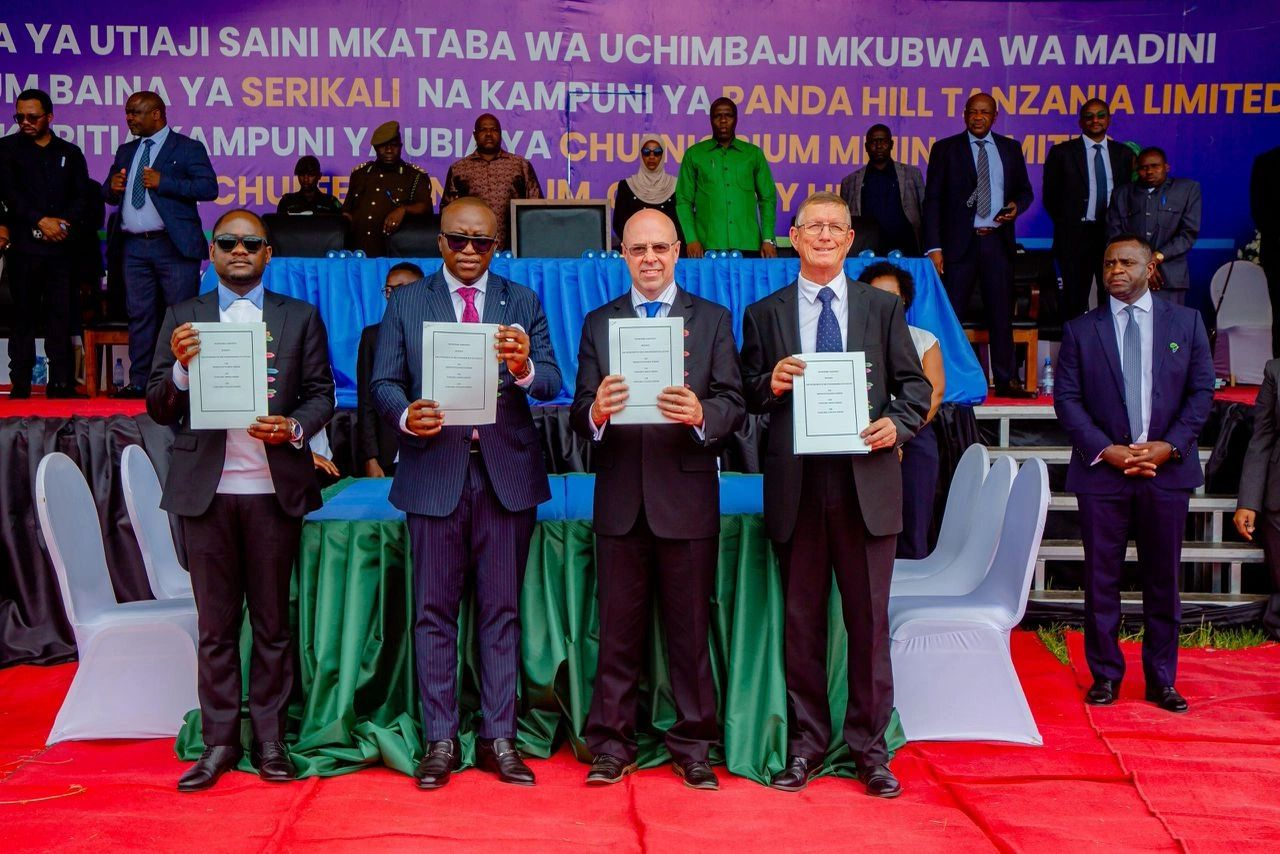
Mbeya | March 24, 2026
Tanzania has taken a decisive step toward becoming a key player in the global critical minerals value chain following the signing of a landmark agreement to develop the Panda Hill Niobium Project. This TZS 700 billion investment, backed by Denham Capital, marks a transformative moment for the country’s mining and industrial sectors.
Tanzania’s Emergence in the Global Niobium Market
With the development of Panda Hill, Tanzania is set to become the world’s fourth-largest producer of niobium, capturing approximately 4% of global market share. The project is expected to produce around 100,000 tonnes annually, positioning the country as a serious competitor in a market currently dominated by Brazil, which accounts for nearly 80% of global output.
Niobium is increasingly recognized as a strategic mineral due to its essential role in strengthening steel and enabling advanced technologies. Its applications span across infrastructure, electric vehicles, aerospace, and high-performance manufacturing – making it indispensable to the global energy transition.
Africa’s First Ferroniobium Plant: A Game Changer
A defining feature of the Panda Hill development is the construction of Africa’s first ferroniobium processing plant – only the fourth facility of its kind built globally in the last 40 years.
This positions Tanzania not just as a raw material exporter, but as a value-added producer within the global supply chain. By integrating mining, processing, and metallurgical production, the project aligns with the country’s broader industrialization strategy.
Under the leadership of Samia Suluhu Hassan, Tanzania has prioritized in-country beneficiation, ensuring that more economic value is retained domestically rather than exported in raw form.
Economic Impact and Job Creation
The Panda Hill Niobium Project is expected to deliver substantial economic benefits, including:
- Creation of approximately 7,000 jobs (direct and indirect)
- Unlocking USD 1.77 billion in local procurement opportunities
- Government retention of a 16% free carried interest
With a targeted 70% local content participation during operations, the project will stimulate growth across multiple sectors, including:
- Construction and engineering
- Logistics and transport
- Technical and industrial services
- Catering, security, and support services
This broad-based participation is expected to strengthen Tanzania’s domestic private sector and drive inclusive economic growth.
Strategic Importance in the Energy Transition Era
As global demand for critical minerals accelerates, Tanzania’s entry into the niobium market comes at a pivotal time. Niobium plays a crucial role in producing high-strength, lightweight materials essential for electric vehicles, renewable energy infrastructure, and aerospace technologies.
By establishing a foothold in this high-value market, Tanzania is positioning itself at the intersection of:
- Global supply chains
- Clean energy transition
- Advanced manufacturing
The Bottom Line
The Panda Hill Niobium Project represents more than just a mining investment – it is a strategic industrial milestone. It signals Tanzania’s transition from a resource-based economy to a value-driven participant in global manufacturing and technology supply chains.
As Mbeya evolves into a hub for strategic minerals processing, Tanzania is setting a precedent for how African nations can leverage their mineral wealth to drive industrialization, innovation, and long-term economic resilience.