
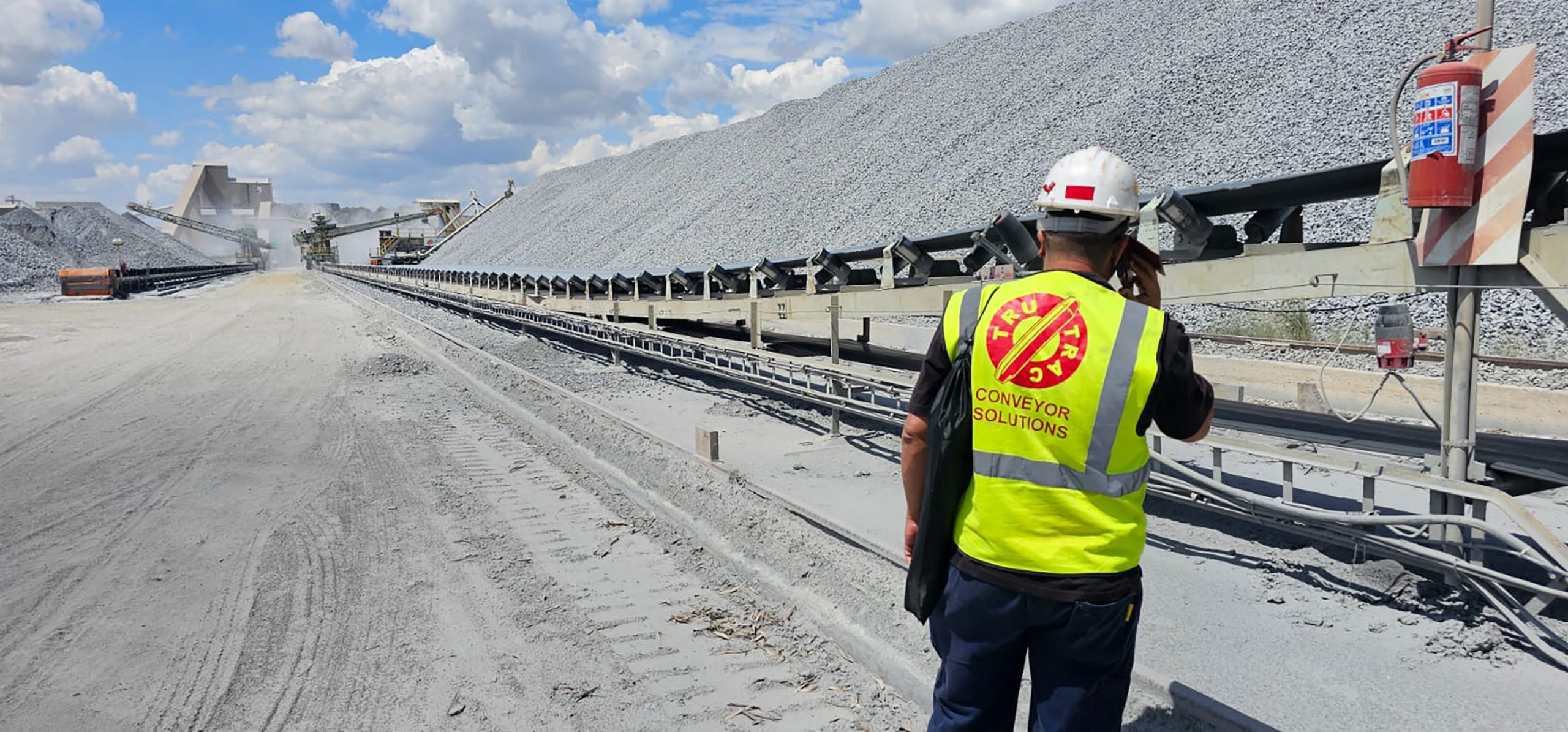
In modern bulk materials handling operations, conveyor performance is directly linked to plant throughput, equipment availability and maintenance efficiency. As production environments place increasing pressure on uptime and tonnage movement, engineered conveyor solutions are playing a far more technical and strategic role in reducing downtime and sustaining operational continuity.
According to David Pereira, Head of Sales at Tru-Trac Rollers, conveyor downtime is seldom caused by a single component failure. More often, it is the cumulative effect of belt misalignment, uneven loading, inadequate impact absorption, carryback and accelerated wear across critical conveyor components.
“Conveyor systems must be treated as integrated engineering systems rather than isolated mechanical assets,” he notes. “A tracking issue at one transfer point, for instance, can quickly translate into edge damage, excessive idler wear, spillage and ultimately a full production stoppage.”
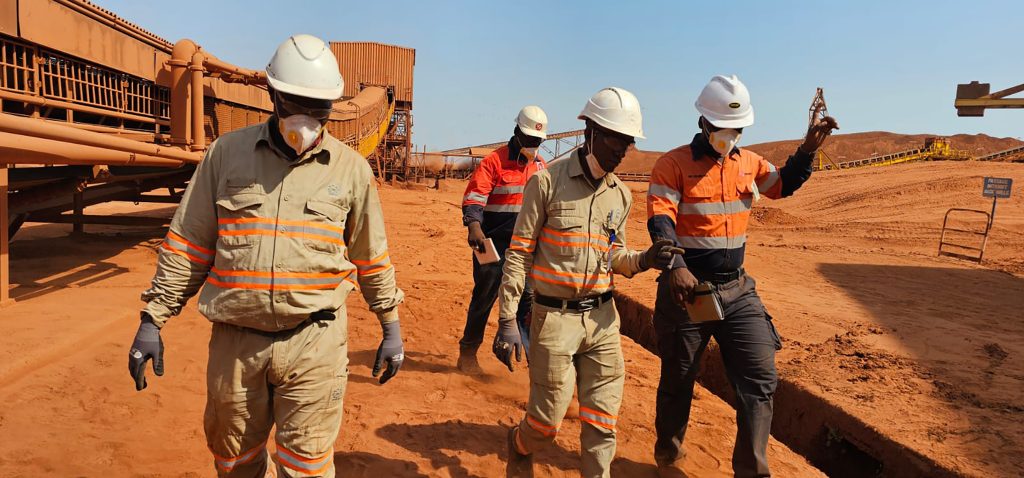
Belt mistracking remains one of the most technically significant causes of unscheduled shutdowns in mining, quarrying, cement and industrial processing plants. When a belt consistently runs off-centre, it creates uneven tension across the belt width, leading to premature edge fraying, structural carcass damage and increased stress on idlers, pulleys and bearings.
This misalignment also results in material spillage at transfer points and along the return side, increasing housekeeping requirements and creating secondary risks to surrounding equipment and personnel.
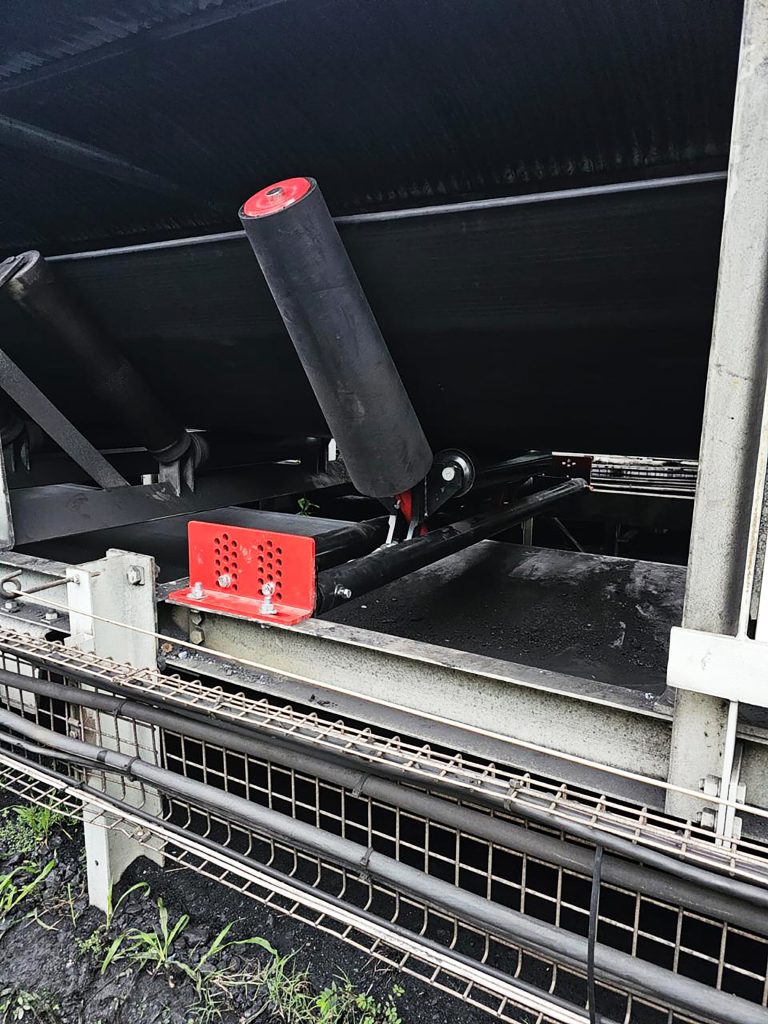
Engineered belt tracking solutions are specifically designed to respond dynamically to changes in belt position, using pivoting or actuated steering mechanisms to correct belt drift in real time. This continuous corrective action stabilises belt movement and reduces the likelihood of chronic mistracking.
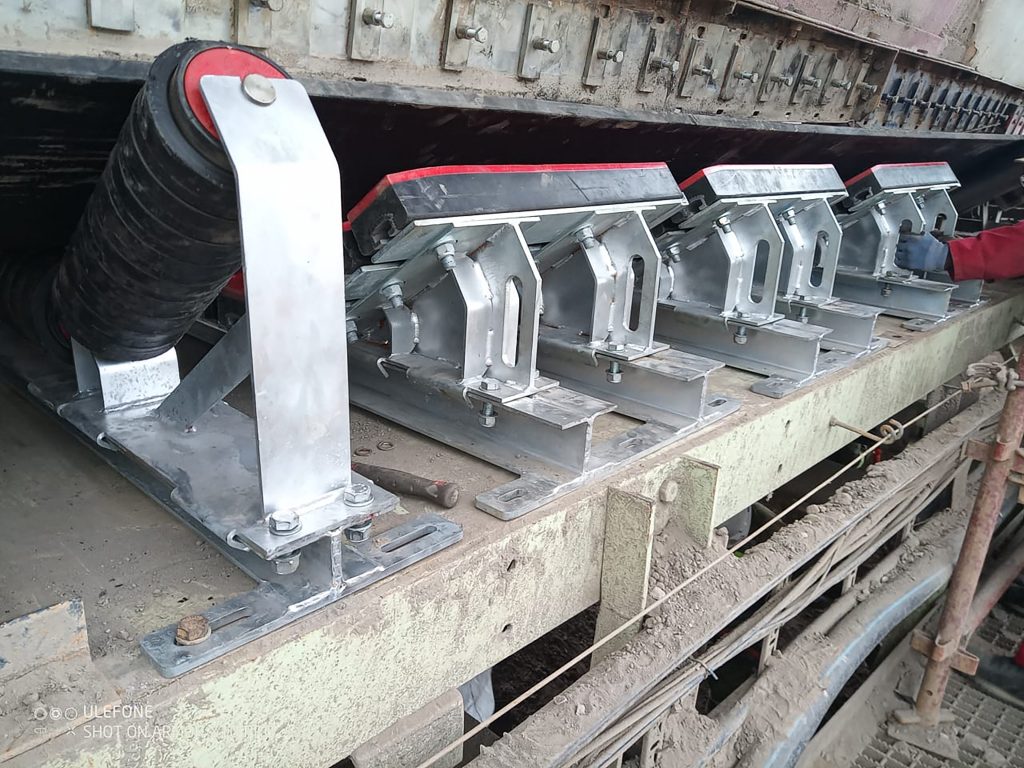
At the same time, properly engineered impact beds and load zone support systems absorb impact energy from material loading, protect the belt carcass from shock damage and maintain consistent belt profile under load. This is particularly important in high tonnage operations where large particle sizes and high drop heights can accelerate belt degradation.
Effective scraper and carryback management systems also contribute significantly to uptime by preventing material build-up on return rollers and pulleys, which can otherwise lead to belt wander, roller seizure and pulley lagging damage.
“Downtime is often a symptom of poor flow control and inadequate conveyor support engineering,” Pereira explains. “By addressing the root causes of instability and wear, operations can significantly reduce emergency maintenance interventions.”
From a maintenance perspective, engineered conveyor solutions support a shift from reactive breakdown response to condition-based and planned maintenance strategies. By improving belt tracking accuracy, reducing wear rates and stabilising load distribution, maintenance intervals can be extended while component life cycles are improved.
This not only protects throughput but also lowers total cost of ownership by reducing belt replacement frequency, idler consumption and unplanned labour costs.
As operations continue to push for higher plant utilisation and reliability, conveyor engineering is increasingly recognised as a core contributor to overall process performance.