

German specialist-vehicle experience meets a new electric 4×4 platform developed around the realities of underground and surface mining.
Mining electrification is often discussed in terms of haul trucks, loaders and other large production machines. Yet every mine also depends on a substantial fleet of light vehicles: pickups, personnel carriers, maintenance vehicles, supervisor vehicles and emergency-response units. These vehicles may be smaller, but they operate continuously across demanding terrain and can make a meaningful contribution to emissions, heat, maintenance demand and ventilation requirements.
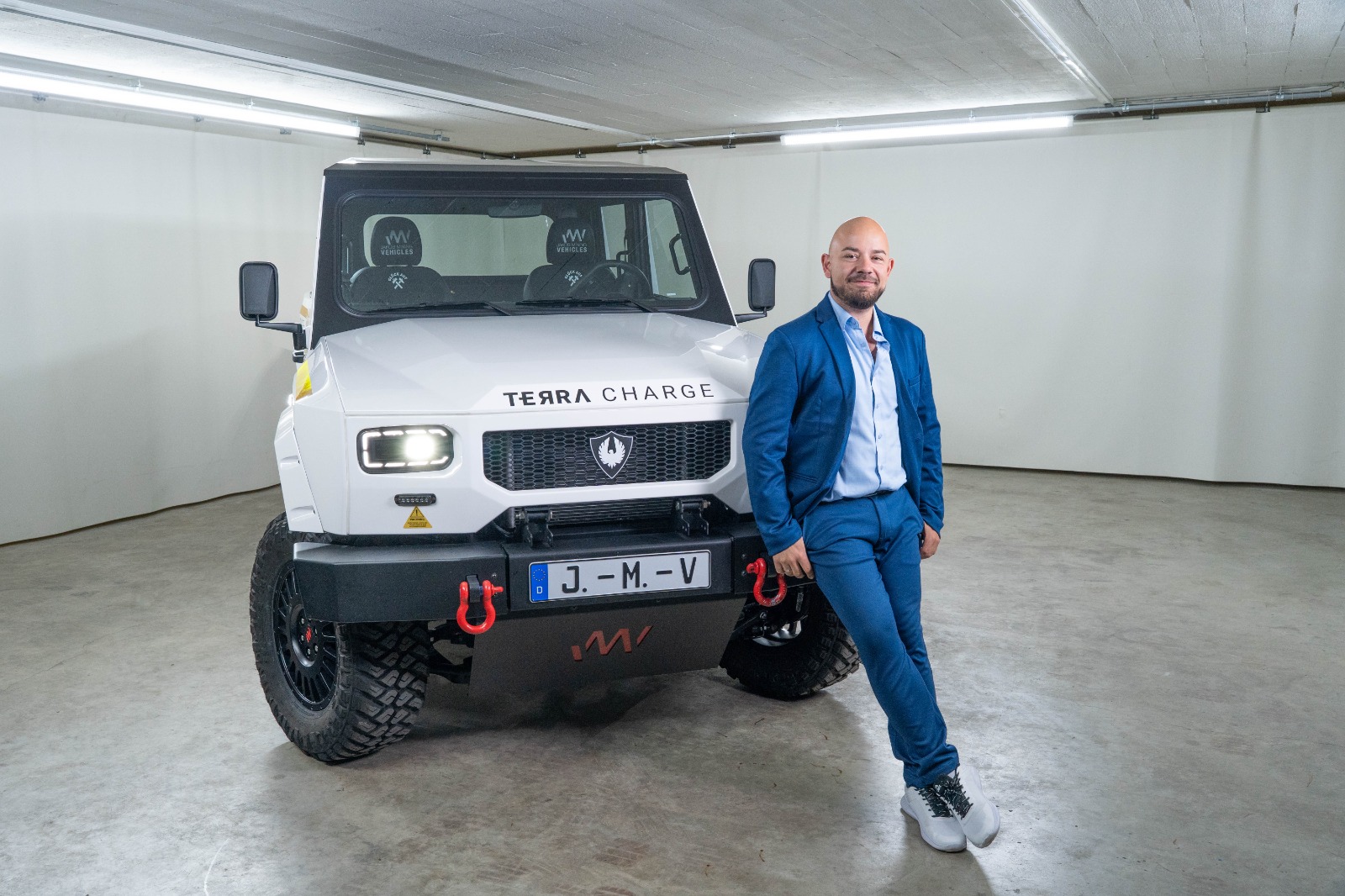
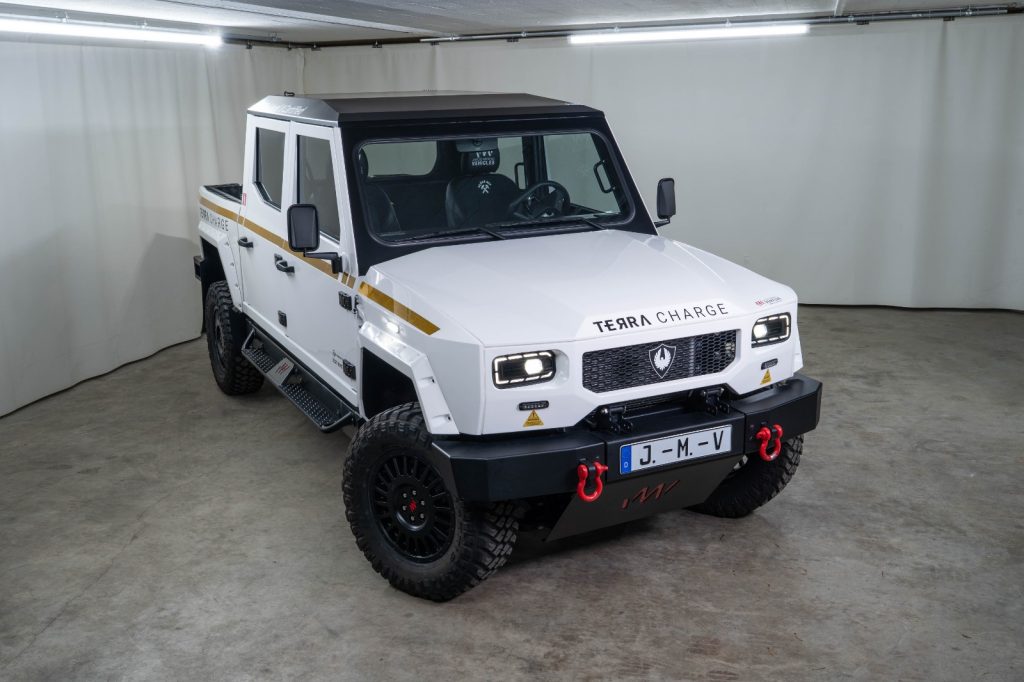
J.M.V. – Jakob Mining Vehicles is addressing this part of the fleet with the TerraCharge, an all-electric 4×4 light utility vehicle developed specifically for mining applications. Revealed at The Electric Mine conference in Lisbon in May 2026, the TerraCharge is intended to combine robust mine-site capability with a serviceable electric architecture, modular body configurations and the safety development required for underground and surface operations.
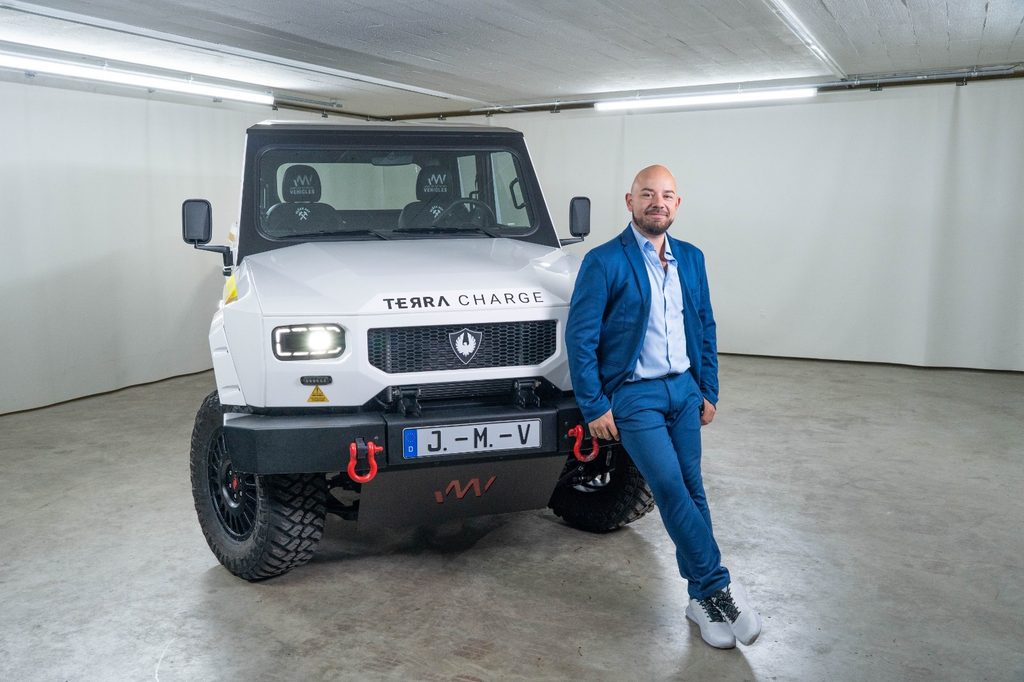
The vehicle is currently in the prototype phase. Three prototypes are being built with JMV’s engineering partner EDAG, with the first drivable prototype planned for the fourth quarter of 2026. Testing and validation will follow. Accordingly, the technical figures in this article describe the current development targets and remain subject to change as the programme progresses.
Designed Around the Mine
The TerraCharge did not begin as a conventional road-going electric pickup that was later adapted for mining. JMV defined the vehicle around the operating conditions and service expectations of mines: dust, water, gradients, repeated low-speed operation, heavy loads, restricted access, harsh climates and the need for equipment that can be maintained far from conventional dealer infrastructure.
“We did not begin with a road-going EV and ask how to make it survive in a mine. We began with the mine and designed the vehicle around its operating reality.”
– Benjamin Jakob, CEO, J.M.V. – Jakob Mining Vehicles
The current prototype concept uses a galvanised steel ladder-frame chassis with a robust body made from aluminium and glass-reinforced plastic panels. The prototype frame, its material specification and the final series configuration are part of the ongoing validation and industrialisation work. This distinction is important: JMV is using the prototype programme to confirm the correct balance between strength, weight, manufacturability and long-term durability before the series design is released.

The target geometry includes approximately 230 mm of ground clearance, an 800 mm wading capability and approach and departure angles of 42 and 32 degrees. Heavy-duty coil-sprung rigid axles and permanent four-wheel drive are intended to provide predictable traction and straightforward mechanical servicing in demanding environments. These values remain preliminary until the prototype test programme is complete.
An Electric Architecture Built for Serviceability
At the centre of the current powertrain concept is a Bosch Rexroth electric motor with a targeted peak output of 140 kW and up to 850 Nm of torque. The single motor drives a conventional transmission and conventional front and rear axles. JMV selected this architecture to avoid unnecessary complexity and to support maintenance by technicians who are familiar with established mechanical driveline components.
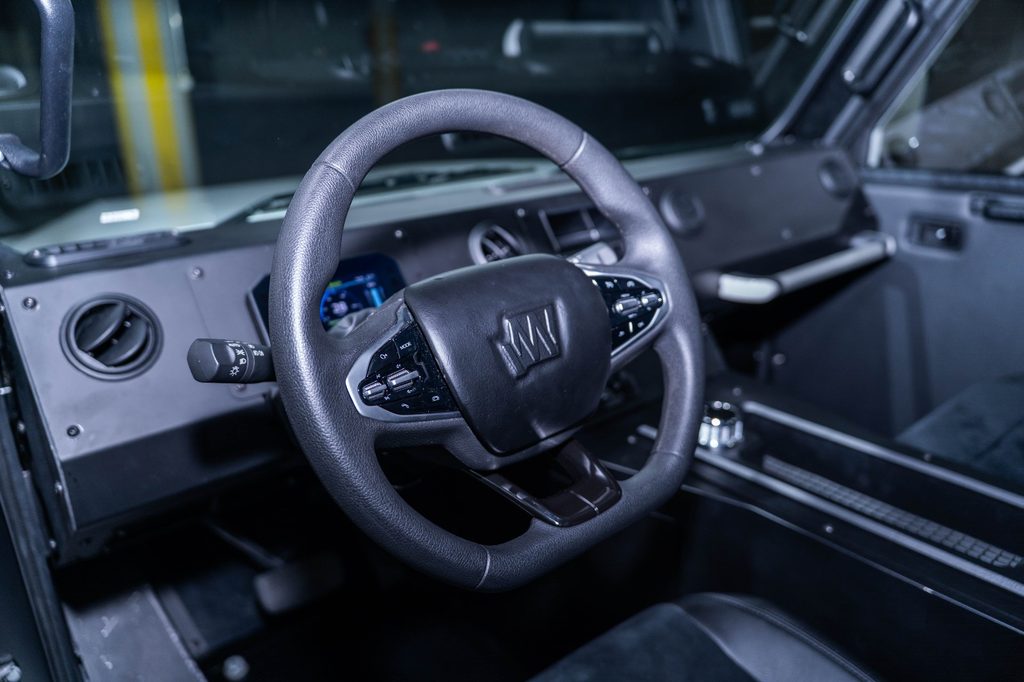
Energy is supplied by an 86.6 kWh lithium iron phosphate battery system comprising three CALB modules. The vehicle uses a 400 V electrical architecture and a battery-management system developed around Bosch Rexroth and integration-partner technology. The modular concept is intended to support diagnostics and controlled isolation of individual battery modules.
“The TerraCharge is one part of an ecosystem. Vehicle, charging, energy supply, training, spare parts and technical support have to work together if electrification is to scale.”
– Benjamin Jakob, CEO, J.M.V. – Jakob Mining Vehicles
Current development targets include DC fast charging at up to 170 kW using CCS2 and 10 kW AC charging. Under suitable charging and thermal conditions, the target for charging from 10 to 80 per cent is approximately 40 minutes. JMV currently estimates a duty-cycle-dependent operating range of approximately 240 to 400 km. In mining operations, however, distance alone is not an adequate measure: gradients, payload, speed restrictions, temperature, auxiliary loads, idle periods and charging opportunities all affect usable shift performance. Real-world validation will therefore focus on representative mine duty cycles rather than a single headline range figure.
Practical Utility, Not Electrification in Isolation
A mine vehicle must remain useful as a working tool. The present TerraCharge targets a gross payload of up to 900 kg, towing capacity of up to 1,500 kg and approximately 1,600 litres of cargo capacity. Planned body configurations include a four-door crew-cab pickup, an enclosed utility vehicle, a flatbed and a two-door chassis-cab for specialist bodies.
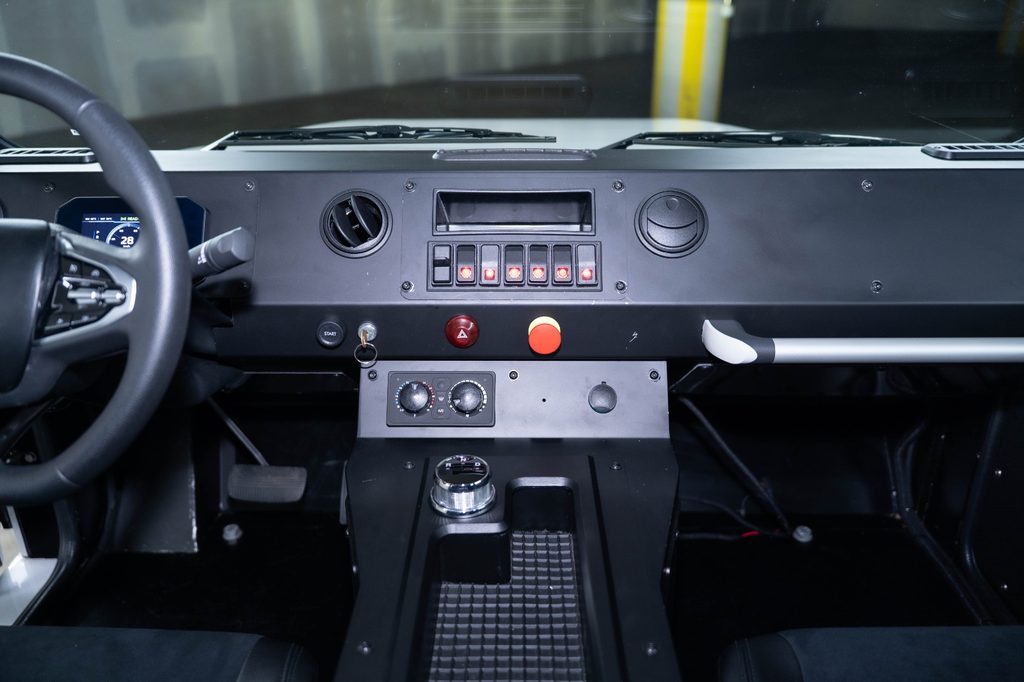
A fully washable interior with drainage is planned for environments where dust and contamination make conventional passenger-car interiors impractical. Depending on the intended application, the platform can also be configured with specialised tyres, underbody protection, enhanced mine lighting, emergency markings, a fire-suppression system and additional braking systems.
The optional 230 V, 3 kW electrical output can support tools and auxiliary equipment directly from the vehicle. For maintenance and service crews, this creates the possibility of combining transport and mobile power supply without operating a separate combustion generator.
Safety Must Be Engineered and Proven
Electrifying a mine vehicle involves more than replacing an engine. The complete vehicle must address structural protection, braking, electrical safety, thermal behaviour, operator protection, visibility, emergency response and the specific rules of the mine in which it will operate.
The TerraCharge is being developed with reference to the applicable mining-machine and vehicle safety framework, including DIN EN ISO 19296:2018. Rollover protective structure requirements remain part of the continuing engineering and validation programme, with ISO 3471 forming a relevant target standard. The TerraCharge roof-protection system has been engineered to the requirements of FOPS Level II under ISO 3449, and the associated certification process is now in its final stage and expected to be completed shortly. Final certification will be confirmed by JMV once the formal documentation has been issued; this does not constitute certification of the complete vehicle or its final series specification.
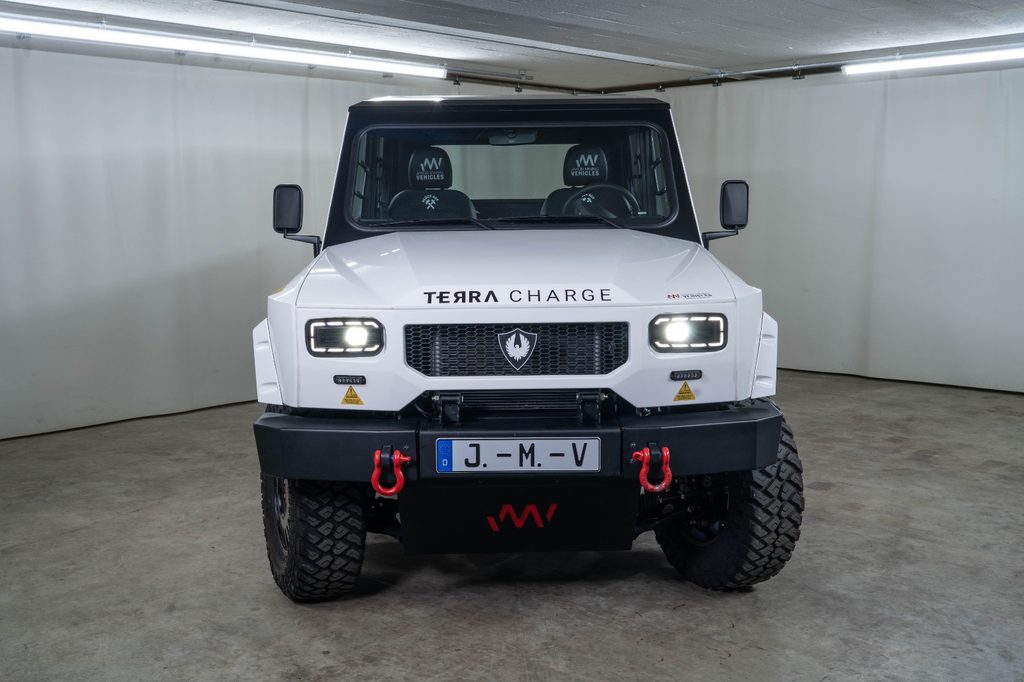
The current safety concept includes three-point seat belts, laminated glazing, sealed wiring harnesses, a dual-circuit braking system and battery-management redundancy. ABS, traction control, a secondary mechanical or fail-safe emergency braking system, fire suppression and wearable safety technologies are among the planned or optional features, depending on final vehicle specification and mine requirements.
Thermal Management Across Mining Regions
Mining fleets operate across a wide range of climates, from Scandinavian winters to the heat and dust of African and Australian sites. The TerraCharge’s HVAC and battery thermal-management concept is being developed with Eberspaecher, with a targeted operating window from -35 degrees C to +50 degrees C.
That range is a design target rather than a universal performance guarantee. Final capability will depend on configuration, battery condition, duty cycle, charging strategy and the environmental conditions at each site. JMV therefore intends to validate vehicles in collaboration with selected mine operators and use the resulting data to define site-specific operating recommendations.
The Wider Operational Case for Electrification
For underground mines, the potential benefit of a battery-electric light vehicle extends beyond zero tailpipe emissions. Diesel vehicles add exhaust gases and heat to an environment where ventilation is both essential and energy-intensive. Reducing combustion-powered traffic can therefore support a wider ventilation and decarbonisation strategy, although the financial impact must be assessed mine by mine.
“For underground operations, electrification is not only about tailpipe emissions. Less exhaust gas and less heat can support a much wider conversation about ventilation, energy and working conditions.”
– Benjamin Jakob, CEO, J.M.V. – Jakob Mining Vehicles
Electric drivetrains can also reduce routine powertrain maintenance and recover energy through regenerative braking. At the same time, operators need suitable charging infrastructure, reliable power supply, trained personnel, emergency procedures and careful fleet planning. JMV’s approach is therefore not to present the vehicle as a stand-alone answer, but as one component within a mine’s energy, transport and maintenance system.
Optional telematics are planned to support remote diagnostics and access to data such as state of charge, charging cycles and vehicle utilisation. This can help operators understand actual duty cycles, plan charging and identify maintenance needs. JMV also intends to use a digital battery passport to support lifecycle traceability, reuse and recycling.
Experience Behind a New Platform
The Jakob organisation’s automotive roots extend over more than four decades. During its specialist mining-vehicle activities, it has converted, supplied and supported more than 1,500 combustion-powered vehicles for mining customers. That background includes vehicles for underground and open-pit operations, rescue and disaster-control applications, specialist conversions, spare-parts logistics, technical training and on-site support.
This operating experience shapes the TerraCharge programme. JMV is working with EDAG on vehicle development and prototype construction. T-Engineering in Trollhaettan, Sweden, has been selected as a manufacturing and industrialisation partner for the planned series-production phase. The initial industrial plan provides for up to 500 vehicles during the first 24 months after series production is launched, with further scaling dependent on demand, validation, supply-chain readiness and financing.
“We will not confuse a prototype target with a proven result. The next phase is about testing the TerraCharge with evidence, under representative conditions, and refining the series vehicle accordingly.”
– Benjamin Jakob, CEO, J.M.V. – Jakob Mining Vehicles
Series production is targeted to begin in 2027, subject to successful prototype testing, validation and completion of industrialisation. Before that point, JMV’s priority is to complete the vehicles, demonstrate them under representative conditions and work with selected mining companies on structured pilot programmes.
Why Africa Matters
Africa is a central market for mine electrification, but it is not a single operating environment. Mines differ in depth, climate, energy availability, infrastructure, fleet size and remaining life. The commercial case for electric light vehicles must therefore be built around the individual site rather than a generic promise.
“Africa is not one uniform mining market. The right vehicle configuration and charging strategy must be developed around the conditions, infrastructure and duty cycle of each individual mine.”
– Benjamin Jakob, CEO, J.M.V. – Jakob Mining Vehicles
The TerraCharge’s modular configuration, thermal-management target and service-oriented driveline concept are intended to provide a basis for that site-specific approach. JMV plans to combine the vehicle with training, technical support, spare-parts logistics and collaboration with local partners. For remote operations, these capabilities will be as important as the vehicle’s headline specifications.
The next phase will show how the concept performs in practice. Prototype results, charging behaviour, maintainability, operator feedback and total cost of ownership will determine the final series specification. By being transparent about that process, JMV aims to build the TerraCharge around evidence from mines rather than assumptions made away from them.
The Road Ahead
Mine electrification will require an ecosystem of vehicles, charging systems, energy management, data platforms, skills and service support. Light vehicles are only one part of that transition, but their numbers and daily utilisation make them an important part.
The TerraCharge represents JMV’s move from converting conventional mining vehicles to developing a dedicated electric platform. The first drivable prototype planned for the fourth quarter of 2026 will be a major step, but not the end of development. It will begin the practical work of testing, learning and refining the vehicle before series production and wider customer deployment. For JMV, the principle is straightforward: build the vehicle around the mine, prove it in the mine and scale it only when the evidence supports it.