Cape Town, South Africa: 15 September 2026 – South Africa remains one of Africa’s most established and diversified manufacturing economies, offering significant opportunities for companies looking to manufacture, invest, source, supply and expand across the continent.
From automotive and advanced manufacturing to food and beverage, chemicals, pharmaceuticals, metals, machinery, green technologies, marine manufacturing and agro-processing, South Africa has an industrial base that provides a powerful platform for accessing both domestic and African markets.
Manufacturing contributes approximately 13.5% of South Africa’s GDP, while the sector employed around 1.68 million people at the end of 2024. Manufacturing is also central to the country’s export economy: in 2024, manufactured goods accounted for 50.5% of South Africa’s total real exports. Yet the opportunity extends far beyond the size of the existing sector.
A Manufacturing Sector ready for new Investment
South Africa is entering a period in which localisation, supply-chain resilience, energy transformation, automation, artificial intelligence, regional trade and changing global supply chains are creating new opportunities for manufacturers and investors.
At the same time, recent economic data demonstrates why renewed investment and competitiveness are so important. South African manufacturing production declined by 1.7% year-on-year in June 2026, while manufacturing contracted by 1.8% in the second quarter of 2026. The challenge – and the opportunity – is to unlock greater investment, improve productivity, increase localisation and strengthen South Africa’s position as a competitive manufacturing base for Africa and international markets.
The Western Cape Manufacturing Opportunity
The Western Cape provides a particularly compelling manufacturing and export proposition.
Manufacturing contributes approximately R85 billion to provincial GVA, with capabilities spanning food and beverage production, agro-processing, marine manufacturing, electronics, green technologies, pharmaceuticals, textiles, machinery and advanced manufacturing. The Western Cape also accounts for approximately 70% of South Africa’s marine manufacturing capacity and ranks second globally in catamaran production.
Investment momentum is continuing. In its 2026 State of the Province Address, the Western Cape Government highlighted a R1.8 billion manufacturing investment among projects approaching financial close and reported the creation of 13,000 new manufacturing jobs.
Exports represent another major opportunity. Western Cape nominal exports grew by an average 6.6% per year between 2015 and 2024, while the province has set an ambitious target to increase exports to R408 billion by 2035 and generate more than 263,000 jobs through its export strategy.
Accessing Africa from Cape Town
For manufacturers, South Africa is not simply a domestic market.
The implementation of the African Continental Free Trade Area (AfCFTA) is creating the framework for a more integrated African marketplace and an opportunity for manufacturers based in South Africa to access growing markets across the continent.
For Western Cape manufacturers in particular, the opportunity is to build businesses that can compete locally while increasingly supplying customers throughout Africa and internationally. This raises an important question:
How can manufacturers, investors and policymakers turn South Africa’s industrial capability into the next generation of manufacturing growth?
Cape Town Manufacturing Summit
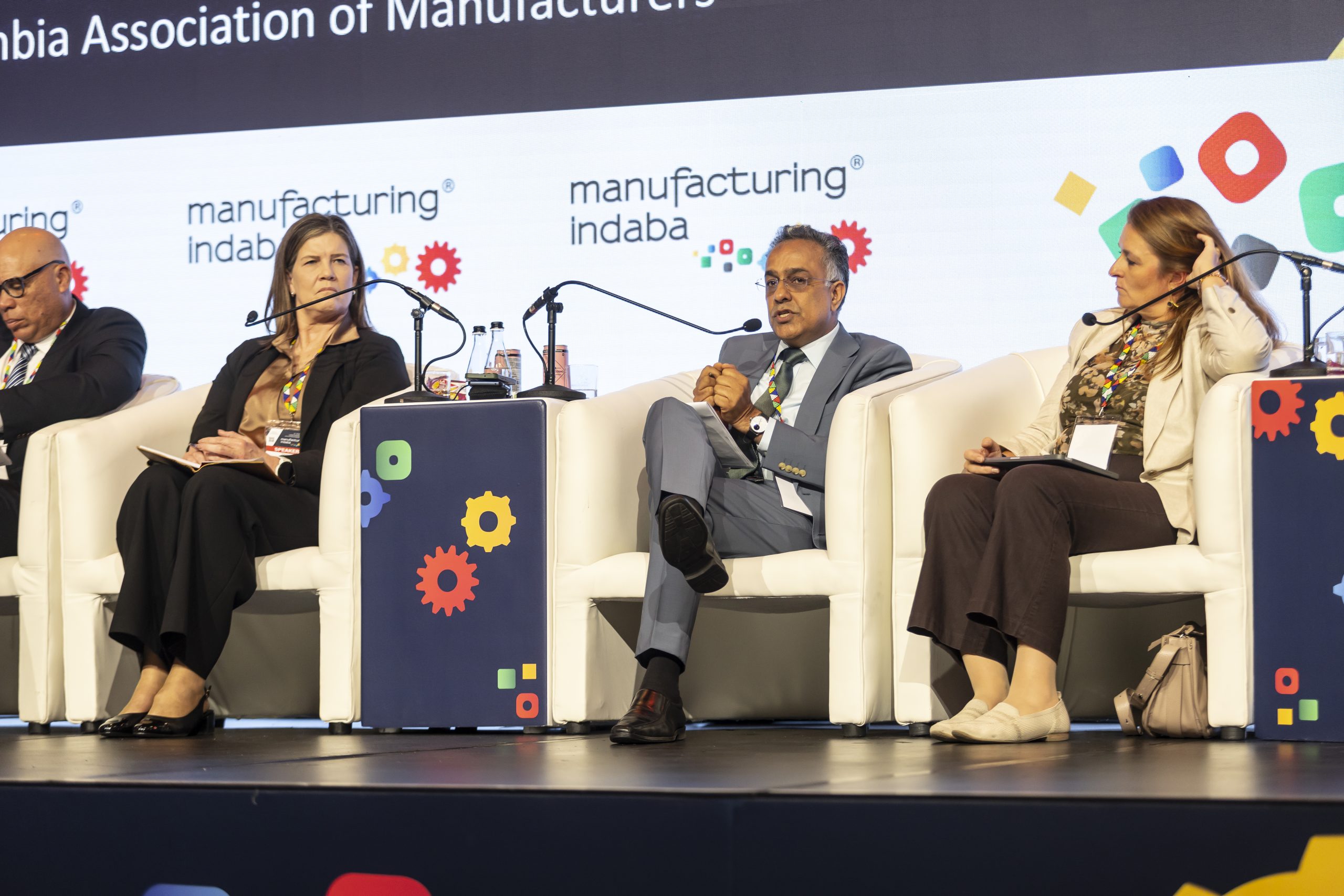
The Cape Town Manufacturing Summit will bring together manufacturers, government, investors, technology providers, industrial leaders and other key stakeholders to explore the opportunities shaping the future of manufacturing in Cape Town, the Western Cape and South Africa.
The Summit will examine the practical issues determining industrial competitiveness, including:
Investment and industrial expansion • Export growth • AfCFTA and access to African markets • Localisation • Energy security • Automation and Industry 4.0 • AI and digital manufacturing • Skills development • Green manufacturing • Access to finance
The objective is clear: to connect the organisations that manufacture, invest, finance, supply, regulate and enable industry – and identify how South Africa can unlock greater manufacturing growth.
South Africa has the Industrial Base. Africa has the Growth Opportunity. The next step is connecting investment, technology, policy and markets.