

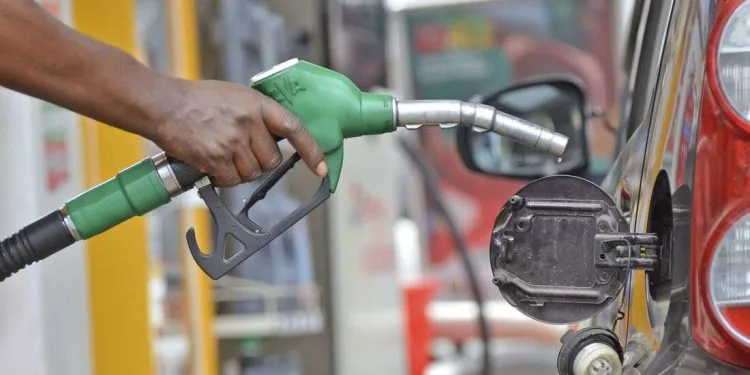
NAIROBI, 21 May 2026 — Kenya’s diesel cut is now being measured away from the pump: in Public Service Vehicle (PSV) fares, farm-to-market transport bills, delivery fees, retailer replenishment costs and generator expenses. After the Energy and Petroleum Regulatory Authority (EPRA) cut diesel while raising kerosene and leaving petrol unchanged, the commercial question is whether a Kenyan Shilling (KSh) 10.06 diesel reduction is large enough to reverse costs already pushed higher by the earlier fuel increase. Under the revised schedule, diesel in Nairobi falls by KSh10.06 to KSh232.86 per litre, kerosene rises by KSh38.60 to KSh191.38, and super petrol remains at KSh214.25 for the period from 19 May to 14 June 2026. Diesel users received partial relief, kerosene users absorbed a sharper adjustment, and petrol users received no relief.
David Precious, Senior Market Analyst at EBC Financial Group, said, “A diesel cut does not automatically undo the fares, delivery charges and food transport costs that were already raised when fuel costs jumped. The KSh10.06 reduction is useful, but transport operators had been asking for a much larger rollback. The real question is whether anyone in the chain has enough room to reverse charges, or whether those costs stay with commuters, food traders and retailers.”
The gap between what transport operators wanted and what the revision delivered is central to the next phase. Transport operators had demanded a KSh46 per litre rollback after the earlier diesel increase, while the revised schedule delivered a KSh10.06 cut. That gap gives operators a commercial reason to maintain pressure on fares, route pricing and freight charges, because the diesel reduction covers only part of the increase that had already changed their operating cost base.
The issue is not only the international crude price. Kenya’s pump price also reflects local taxes, levies, margins, landed product costs and exchange-rate effects. The Kenya National Chamber of Commerce and Industry (KNCCI) said Kenya’s diesel price rose faster than global crude over the April to May pricing cycle, pointing to domestic cost build-up that amplifies imported oil-price shocks before they reach transporters, traders and consumers.
The risk for consumers is that earlier fare and delivery increases may become sticky because transporters, wholesalers and retailers often set charges based on the higher cost already paid, not only on the latest pump price. KNCCI warned that the latest fuel adjustment could raise transport and logistics costs by 10% to 20%, food and consumer goods prices by 3% to 7%, manufacturing and farm distribution costs by 5% to 12%, and micro, small and medium enterprise (MSME) margins by 5% to 15%. That makes the diesel cut commercially important, but not automatically sufficient: if transporters and suppliers do not revise charges after the KSh10.06 reduction, the earlier fuel shock remains embedded in food distribution, retail pricing and business cash flow. Reports from Nairobi’s Wakulima Market have already pointed to higher farm-to-market transport costs, showing how diesel pressure can reach food traders before it appears clearly in headline inflation data.
Kerosene now matters for two specific reasons. First, households that rely on kerosene for cooking and lighting face a higher daily energy cost after the KSh38.60 increase. Second, EPRA said the recalculation followed a petition by public transport operators to minimise motor fuel adulteration risk arising from diesel and kerosene price differences. A wide price gap can encourage rogue dealers to mix cheaper kerosene into diesel, which can damage engines, raise maintenance costs and reduce route reliability.
The Petroleum Development Levy (PDL) Fund now matters because it determines how much landed fuel cost is held back from pump prices in each review cycle and how much is passed to consumers. The May pricing cycle included about KSh5 billion from the PDL Fund to cushion diesel and kerosene prices. If landed costs stay elevated, the next review faces a clear trade-off: higher pump prices, larger stabilisation support, or delayed settlement pressure for oil marketers.
Fuel availability is also relevant because companies need predictable supply as well as lower prices. Earlier shortages among independent outlets showed that disruption can affect delivery planning before a new price review is announced. In March, about 20% of 3,100 independent fuel outlets were affected by shortages, while hoarding ahead of expected price increases was cited as a supply risk. For manufacturers, farms, retailers and transporters, uncertain diesel access can delay trips, disrupt stock movement and increase the cost of holding backup fuel.
Kenya’s fuel import system also affects local pump prices because the country buys refined petroleum products through government-to-government arrangements with Gulf suppliers rather than producing enough fuel locally. The supply framework allows fuel purchases on 180-day credit terms, but domestic pricing remains exposed to landed product costs, contractual margins, shipping conditions and the United States dollar (USD) to KSh exchange rate. That keeps foreign exchange (FX) sensitivity inside the pricing formula even when the shilling is stable.
“The stabilisation fund can delay part of the shock, but it cannot make the landed fuel cost disappear. If oil, shipping or dollar-linked costs stay high, the pressure comes back in the next review,” Precious added. “It then becomes a question of who carries it: the state, oil marketers, transporters, businesses or consumers.”
The key indicator to watch is whether PSV fares, truck rates, wholesale food transport charges, generator bills, retailer replenishment costs and fuel availability improve after the diesel revision. Until those costs ease in real invoices and household budgets, Kenya’s diesel cut remains a pricing adjustment, not full economic relief. For more information, visit www.ebc.com