

Pilot Crushtec believes a robust front-end engineering design (FEED) study is the foundation of every successful crushing and screening project, using decades of African experience to identify gaps, optimise plant design and reduce long-term CAPEX and OPEX. By combining proven engineering expertise with a simple, modular design philosophy, the company helps customers develop practical, reliable plants that deliver sustainable operational performance.
For many mining and quarrying projects, the temptation is to rush from concept to equipment selection, with front-end engineering design (FEED) treated as a formality. Crushing and screening specialist Pilot Crushtec takes the opposite view. Drawing on decades of experience in Africa, the company has made proper FEED studies the cornerstone of its project approach. The company uses this wealth of knowledge to identify gaps, challenge assumptions and guide its customers towards proven, optimised solutions.
Jorge Abelho, Director of Technical Support at Pilot Crushtec, states that it is vital to do the correct FEED study. “If this is not done, the equipment selection, the plant layout and the process won’t work out correctly and you end up having to do changes later. This can be very costly and difficult.”
He points out that once a plant is built, the room for correction is limited. “If you have got the wrong process layout and you want to try to change it in an operational plant, that is a major disruption. So, it is a lot more costly down the line.”
In practice, many FEED studies sent to Pilot Crushtec require further refining. Here, experience plays a critical role in exposing what is missing and, more importantly, what that means for the plant. “Often, to identify potential gaps, a sales engineer will go to a site and engage with a customer. Here we ask questions such as: What are your challenges? What is your maximum feed size? What is your grading?” Abelho adds.
Once the gaps are understood, Pilot Crushtec leans heavily on decades of installations across Africa to challenge initial concepts. That experience allows the team to propose process routes and equipment selections that may differ from a client’s starting point but are grounded in real-world performance.
According to Abelho, in some cases, this means rethinking the entire flowsheet. “For example, sometimes depending on the grading and the blasting, you should choose a screening plant and not necessarily a crushing plant. This is a more cost effective option. That insight, backed by reference cases, can materially reduce both CAPEX and OPEX,” he states.
Beyond identifying gaps and proposing concepts, Pilot Crushtec actively supports both its customers and consulting engineers in turning FEED into buildable, operable plants. Its in-house engineering team develops modular layouts, checks fit and interfaces and translates process concepts into practical configurations. “Our approach is that we design modular equipment for a plant. This means selecting equipment depending on the customer’s specific application,” Abelho explains.
He adds that the company follows a “simple by design” philosophy that avoids unnecessary complexity in its crushing and screening plants, especially for remote African operations. Instead of layering on advanced, electronics-heavy systems, the company focuses on robust modular equipment that is easy to understand, operate and maintain. “This simplicity starts at the design stage where in-house engineers configure proven building blocks into practical plant layouts. The result is a plant that costs less to build, is quicker to commission and can be easily maintained, ” he states.
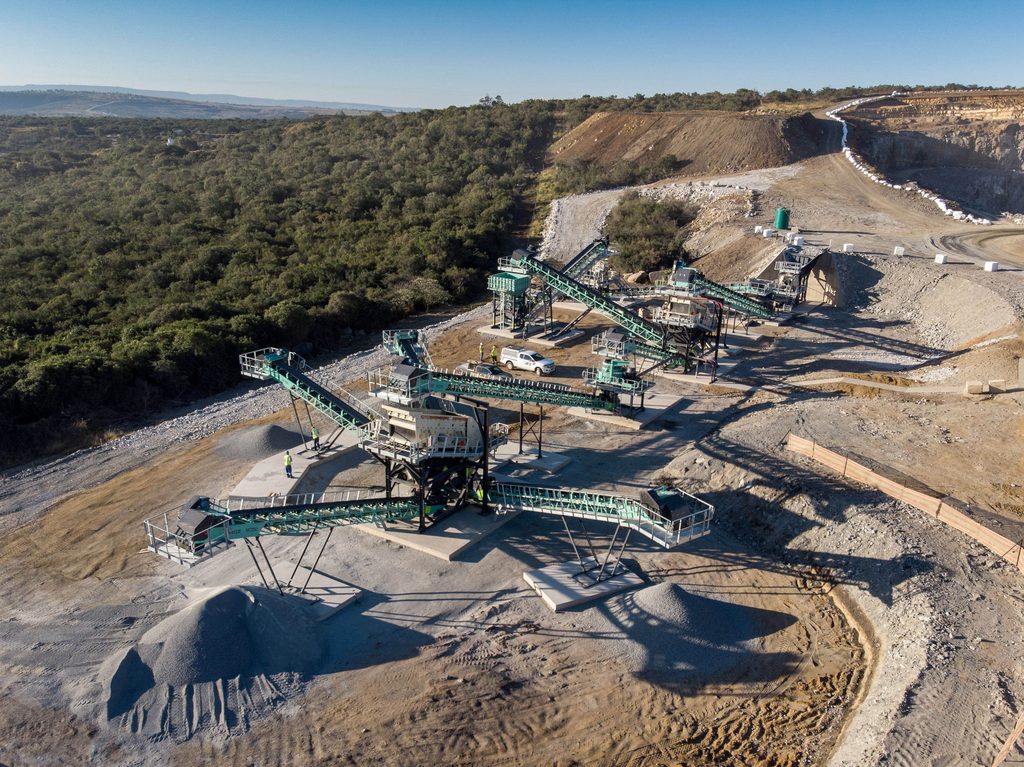
Furthermore, because these modules are standardised and proven, Pilot Crushtec can quickly provide detailed site drawings and practical operating guidance. This gives consultants and customers a clear basis for decision-making. On the operational side, the company’s support includes manuals, training and ongoing technical assistance.
From identifying missing data in FEED studies to challenging assumptions with proven references to guiding equipment selection and configuration, Pilot Crushtec uses its decades of crushing, screening and materials handling experience to ensure that FEED is not just a document but a robust foundation for long-term performance.
For more information please visit: www.pilotcrushtec.com