25 March 2026: As Africa’s mining landscape shifts toward stricter environmental stewardship and more rigorous mine-closure obligations, a new partnership is reshaping how the continent approaches financial assurance. Credeq Africa (Pty) Ltd, an authorised Financial Services Provider underwritten by Lombard Insurance Company, has partnered with Access Bank to deliver a pioneering, mining rehabilitation guarantee designed for Africa’s evolving regulatory environment.
With its heritage rooted in Lombard and more than two decades of specialised experience in South Africa’s mining sector, Credeq Africa identified a growing challenge: many African jurisdictions now require rehabilitation guarantees to be issued strictly by banks, placing pressure on mining companies’ credit facilities. To address this, Credeq Africa, as an underwriting management agency (UMA), engineered a solution that blends underwriting expertise with Access Bank’s extensive African footprint to support responsible mine closure across diverse markets.
The African mining sector will grow to roughly USD 847 billion by 2026, according to a report from Verified Market Research. As mining expands, regulators across the continent are tightening governance frameworks around mine closure and rehabilitation funding. Countries such as Botswana and Zambia now require mining companies to furnish financial guarantees to ensure sufficient funds are preserved for mining rehabilitation. While these guarantees support environmental protection and responsible mine closure, they also create financial strain: traditional bank-issued guarantees consume valuable credit lines that mining companies would prefer to reserve for operational growth or capital projects.
By partnering with Access Bank, which has an extensive local footprint, regulatory insight and relationships across key mining jurisdictions in Africa, Credeq Africa, as the UMA, and Lombard – as the insurer, can offer a compliant, insurance-backed solution that meets local rules while delivering mining companies greater financial flexibility.
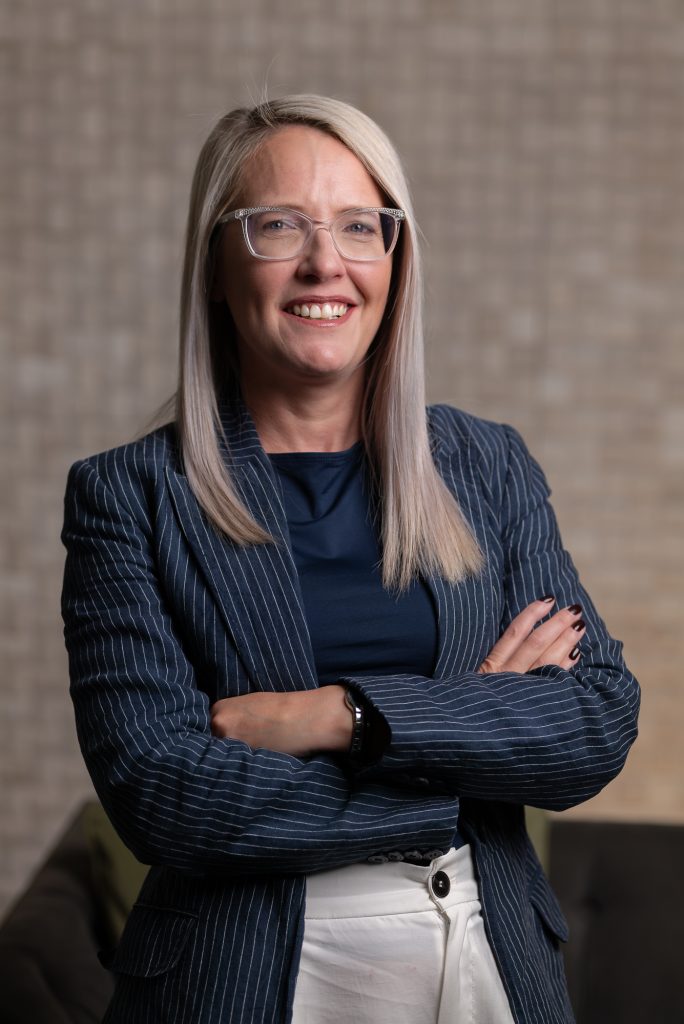
“The partnership with Access Bank is really a match made in heaven,” explains Juanita Putter, Manager: Mining Guarantees at Credeq Africa. “They bring the in-depth local knowledge and relationships needed to navigate regulatory requirements, and we bring the underwriting expertise developed over more than two decades. Together, we offer mining companies a solution that provides compliance and financial flexibility.”
Peter Ford, Subsidiaries: Mining at Access Bank, adds: “We believe that Credeq, underwritten by Lombard Insurance Company and in partnership with Access Bank, together brings a partnership that delivers a more capital‑efficient format for mining companies and regulators, strengthening compliance, while supporting a critical aspect of the license to operate for our clients.”
The solution follows a clear and aligned structure. The mining company enters a facility with Lombard Insurance, with Credeq Africa responsible for the underwriting, structuring and management of the rehabilitation guarantee. Access Bank then issues the guarantee to the relevant authorities in countries where only a bank is permitted to do so or where it is accepted.
Most of the risk sits with Lombard as the insurer, allowing Access Bank to issue the guarantee without drawing on the mining company’s credit facilities. The result is a compliant, bank-issued mining rehabilitation guarantee that behaves like an insurance-backed solution, freeing the mining company’s banking lines for operational use.
“Mining rehabilitation guarantees can tie up credit facilities for years,” Putter notes. “Our solution allows clients to keep their banking lines available for working capital and growth rather than locking them into long-term compliance obligations.”
Ford comments: “By leveraging our in-country balance sheets, we provide local credit lines that drive economic growth. This partnership ensures clients meet regulatory obligations while increasing balance sheet efficiency, freeing up costly credit lines for investment in expansion and operational growth instead.”
Credeq Africa works closely with mining clients to develop a responsible, structured approach to funding rehabilitation liabilities over the life of mine. This includes analysing production profiles, understanding the mine’s stage of development and building up rehabilitation funds progressively.
The initial rollout of the mining rehabilitation guarantee focuses on key African mining jurisdictions such as Mozambique, Botswana, Zambia, the Democratic Republic of Congo, Ghana and Tanzania. “Interest has already emerged in Botswana following regulatory reforms requiring rehabilitation guarantees to be issued strictly by banks, making the Access Bank, Lombard and Credeq Africa structure particularly attractive. While copper is a major point of focus due to its prominence in Zambia and the DRC, the solution is open to a wide range of commodities subject to our risk appetite,” Putter explains.
For Credeq Africa, this marks an important extension of its underwriting capability into Africa and represents an opportunity to support its clients – many of whom operate across multiple African countries – with a consistent and specialised solution. For Access Bank, it strengthens its role in the mining sector by enabling a compliant mining rehabilitation guarantee structure backed by an experienced insurer and UMA.
Ford adds: “Access Bank operates in 16 African countries with full wholesale banking capabilities. Mining is a strategic pillar across our subsidiaries, and this partnership enhances our product suite, reinforcing our ability to support clients across the sector’s entire ecosystem.”
With Africa’s mining sector poised for continued expansion, particularly in green energy metals, the partnership between Credeq Africa and Access Bank offers a timely and innovative alternative to traditional rehabilitation funding mechanisms. “It delivers compliance, protects environmental priorities and gives mining companies the financial flexibility they need to invest and grow without compromising their closure obligations,” Putter concludes.