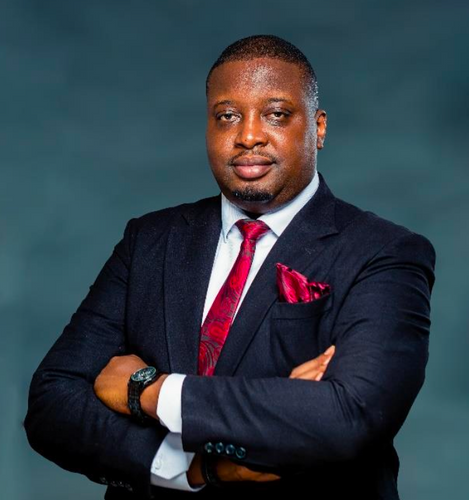
by Humphrey Asiimwe, Chief Executive of Uganda Chamber of Energy and Minerals
The Africa Energy Indaba 2026 is thick with the energy narrative that finally shifts from potential to production. While the global north debates “net zero,” we in Sub-Saharan Africa are navigating a “Great Reset” where carbon neutrality must coexist with the urgent need to replace charcoal stoves with something better.
Africa holds 60% of the world’s best solar resources, yet we attract less than 2% of global clean energy investment. In Uganda, we have made massive strides, reaching 2,052.6MW of installed capacity following the full commissioning of the 600MW Karuma Hydro Power Plant. We have achieved a deliberate surplus, which Fatih Birol, Executive Director of the IEA, once called a “moral imperative” for industrialization. Yet, despite this generation “win,” we face a sobering reality: only about 28% of Ugandans are connected to the national grid.
Damilola Ogunbiyi, CEO of Sustainable Energy for All (SEforALL), famously asserted that “there is no transition without Africa,” and that leaving a billion people in energy poverty is simply unacceptable. The “near misses” of the last decade have been painful. For years, Uganda paid for “deemed energy”—power produced but not consumed because our transmission lines could not carry the load. It was like having a feast ready but no road to the dining room.
By 2026, the story is changing. The East African Crude Oil Pipeline is 79% complete, with the first shipment of crude from the Tanga Marine Terminal scheduled for October 2026. We are funding our green ambitions with “black gold.” The Ugandan government is explicit: oil and gas revenues will finance the Energy Transition Plan, targeting carbon neutrality by 2050. This is not a retreat into fossil fuels; it is a strategic bridge. As Carlos Lopes, former Executive Secretary of the UNECA, noted, “Africa is the testbed of tomorrow’s economy,” and we must use every resource to get there.
The eradication of energy poverty is stalled by what I call the “Triple Crisis.” In Uganda, rural grid access remains low at 9.1%. The barrier is not just the monthly bill; it is the “upfront” pain. A typical rural household faces an average inspection charge of US$11.23, plus wiring costs that can dwarf a month’s income. When 60% of Ugandans earn US$50 a month, a grid connection becomes a luxury rather than a utility.
To combat this, the government took a bold step in April 2025, ending the Umeme concession and returning distribution to the state-owned Uganda Electricity Distribution Company Limited. The results have been startling: 648,404 new connections were added in the first six months alone. Energy losses also dropped from 19.1% to 16.8%, signalling that state-led governance can—and does—work when focused on service over dividends.
We are also realizing that we cannot do this alone. The evolution of regional power pools like the Southern African Power Pool, the Eastern Africa Power Pool and the Zambia-Tanzania-Kenya (ZTK) interconnector is finally linking energy markets, allowing us to “wheel” surplus power to deficit-hit neighbours. This integration de-risks large projects by providing a broader customer base beyond national borders. As Kandeh Yumkella, former UN Special Representative, reminds us: “Energy is the golden thread that connects economic growth, social equity, and a healthy environment”.
For the savvy investor, Africa in 2026 is a land of value-chain integration. We are moving from being equipment-buyers to ecosystem-drivers. Spending on Electric Vehicles in Africa reached nearly US $70 million in 2023, an eightfold increase in just two years. US$23 billion is needed globally just to expand energy access to those in extreme poverty. Investors are shifting away from risky residential models toward C&I solar, where the “offtake” (payment) is more reliable.
Nigeria alone is targeting a US$410 billion investment opportunity to become a renewable energy hub by 2060. Meanwhile, the EU’s Global Gateway has pledged €150 billion for sustainable infrastructure in Africa, aiming for 50 GW of new renewable capacity by 2030.
As we walk the floor at the African Energy Indaba, listen to a continent that has stopped apologizing for its development needs. We are using hydrocarbons responsibly to fund a renewable future, integrating our grids through regional cooperation, and innovating past the “zombie energy systems” of the past.
The finish line of universal access is still a marathon away, but for the first time, the “Pearl of Africa” has the wind at its back. Energy poverty is a choice we are no longer willing to make. For Uganda and the rest of the continent, 2026 is not just about oil; it is about finally turning the lights on for the next billion people. As Damilola Ogunbiyi put it, “The transition is for and about people”. Let us make sure those people are finally connected.
Mr. Humphrey Asiimwe will be among the distinguished speakers at the Africa Energy Indaba 2026 – Africa’s premier energy conference and exhibition – happening 3-5 March 2026 in Cape Town. Join policymakers, investors and innovators driving the continent’s sustainable energy transformation. Visit www.africaenergyindaba.com to register.