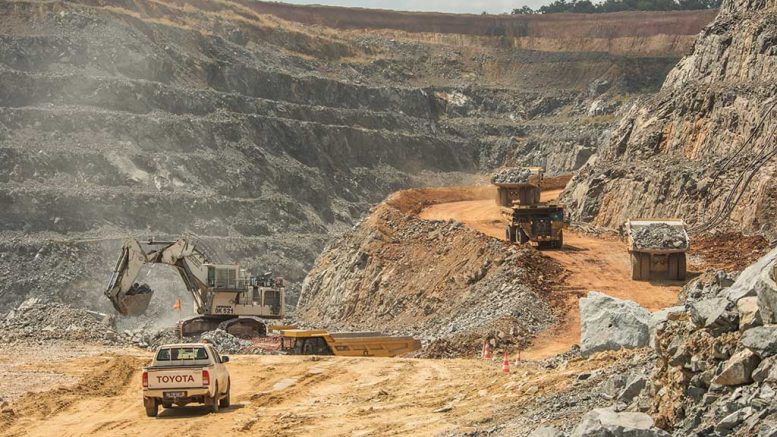
Barrick Gold has completed the sale of its entire interest in the Tongon gold mine and associated exploration permits in Côte d’Ivoire, officially transferring ownership to Atlantic Group, one of West Africa’s fastest-growing Pan-African conglomerates.
The transaction, valued at up to US$305 million, includes an immediate cash payment of US$192 million and additional contingent payments of up to US$113 million, tied to future gold prices and resource conversion milestones.
This marks a pivotal moment for the Ivorian mining sector: for the first time, Tongon becomes fully owned by an African entity, aligning with a broader continental trend toward increasing local participation in the mining value chain.
A New Era for Côte d’Ivoire’s Mining Industry
Since its first gold pour in 2010, Tongon has been a cornerstone of Côte d’Ivoire’s modern mining industry. Over its lifetime, the mine has generated more than US$2 billion in economic contributions, from taxes and royalties to employment, infrastructure development, and local procurement.
With Atlantic Group assuming control, Tongon now enters a phase of African-led stewardship, which many in the industry view as a positive step for:
- Local value retention
- Stronger alignment with national development strategies
- Sustained investment in community and social programmes
Atlantic Group’s diversified presence across 15 African countries, spanning logistics, agribusiness, manufacturing, finance, and energy, positions it to integrate Tongon into a broader continental growth strategy.
Why Barrick Sold Tongon: Strategic Portfolio Optimisation
From Barrick’s perspective, the divestment is part of its global strategy to streamline its portfolio and prioritise Tier One gold and copper assets — operations defined by long life, low costs, and strong future expansion potential.
By exiting Tongon, Barrick:
- Strengthens its balance sheet
- Improves capital efficiency
- Concentrates on high-margin assets across its core regions
- Continues its disciplined approach to asset optimisation
This move mirrors a wider industry pattern where major global mining houses are realigning portfolios, especially in West Africa.
West Africa’s Mining Landscape: A Wave of Strategic Repositioning
The Tongon sale is one example of a broader regional shift occurring across West Africa’s mining sector:
1. Global majors are pruning non-core assets
Companies such as Barrick, Newmont, and AngloGold Ashanti have been re-evaluating their West African footprints. Older mines, mature assets, and those requiring significant reinvestment are increasingly being sold to regional operators.
2. African companies are stepping up as buyers
A growing number of Pan-African investors, particularly those with diversified portfolios, are acquiring mining assets that were historically controlled by foreign majors. This includes:
- Conglomerates
- Regional mining contractors
- African private equity firms
- Locally backed consortiums
This trend signals increasing confidence in African technical and financial capability.
3. Governments are encouraging local ownership
Many West African jurisdictions are updating mining codes to encourage:
- Local content
- Domestic procurement
- National shareholding in key mineral assets
The move toward regional control of profitable mines aligns with long-term economic development goals.
4. Exploration investment remains strong
Despite global asset reshuffles, West Africa continues to attract exploration capital. Côte d’Ivoire, Ghana, Mali, Burkina Faso, and Guinea remain some of the most active jurisdictions in the world for gold exploration.
What Tongon’s Sale Means for Africa’s Mining Future
For the continent’s mining and engineering professionals, the Tongon transaction offers several important insights:
Strengthening African Ownership of Strategic Assets
The successful handover of a long-life gold mine to an African group reinforces the narrative that regional operators are ready to manage world-class assets.
Sustained Value for Host Communities
Local ownership may improve communication between operators, governments, and communities — supporting more responsive, sustainable, and inclusive development.
Opening the Door for More African Investors
As global mining houses streamline operations, more opportunities will emerge for African investors to acquire producing assets or form joint ventures.
A More Balanced, Locally Driven Mining Ecosystem
Tongon’s transition reflects the gradual evolution of Africa’s mining industry toward a structure where:
- Global majors
- Pan-African industrial groups
- Local mining companies
all play differentiated but complementary roles.
The completion of the Tongon transaction is more than a corporate deal, it is a barometer for where African mining is headed. The future is increasingly defined by:
- Regional ownership
- Sustainable operations
- Technological adaptation
- Indigenous workforce development
- Locally anchored value chains
For mining engineers, suppliers, contractors, policymakers, and investors, this marks a shift toward a more resilient, African-led mining landscape.