
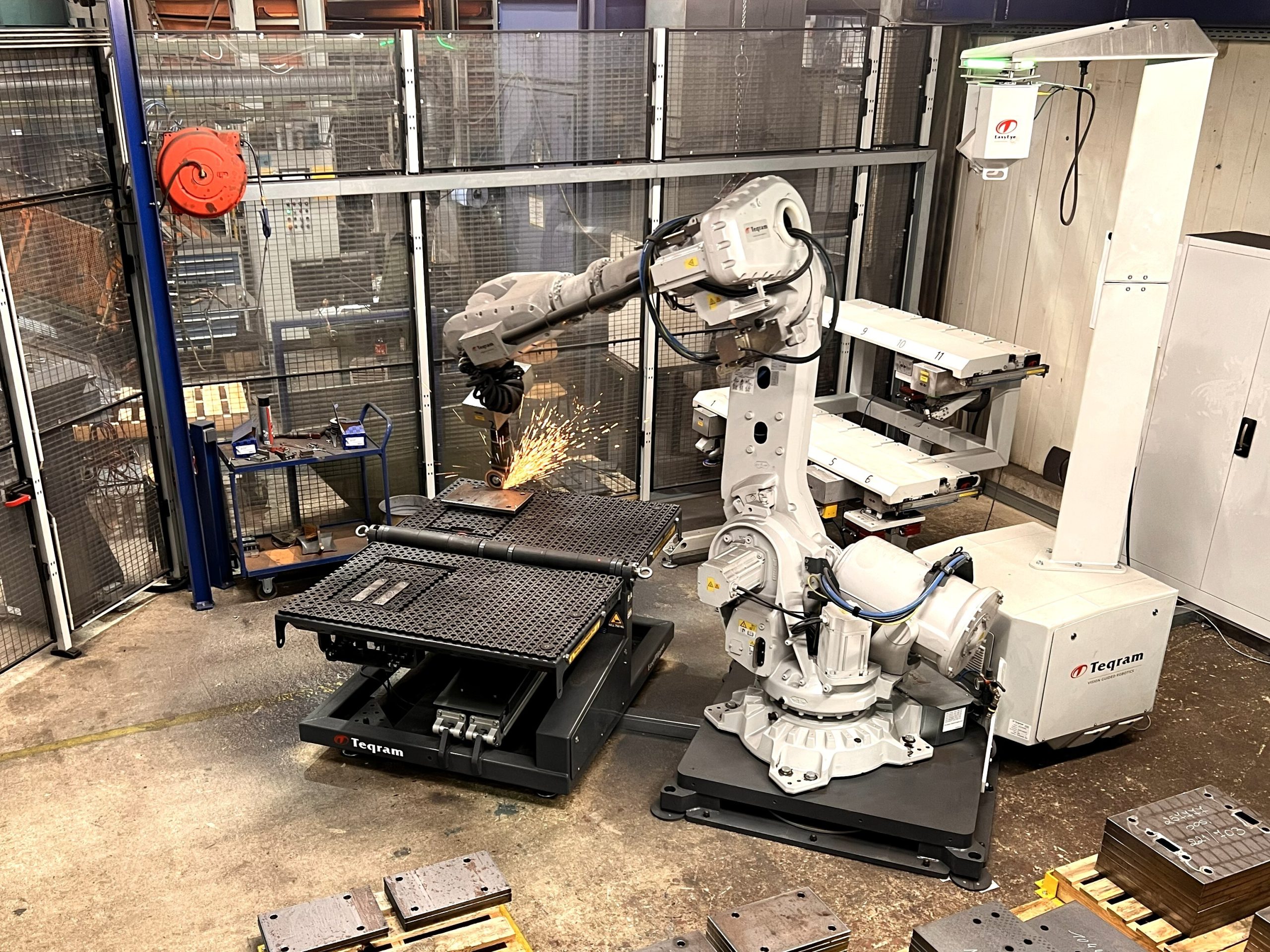
Quality requirements in steel construction are continuously increasing – especially for projects with preparation grade P3. For Peters Stahlbau, this led to more rework, greater physical strain on employees and growing time pressure. With the Teqram EasyGrinder robot, the grinding process has been significantly optimised: quality is now fully reproducible, employees experience clear physical relief, and the consumption of grinding materials and tools has been considerably reduced
Rising quality requirements as a trigger for investment
Peters Stahlbau manufactures complex steel structures for industrial and commercial buildings across Europe. Many contracts involve higher requirements for surface preparation – particularly for P3.
“The requirements for finishing quality have increased significantly in recent years,” emphasises Frank Evers, workshop manager at Peters Stahlbau. For P3 components, all edges must be rounded to a minimum radius of 2 mm, and the hardened heat-affected zone must be completely removed. When done manually, this process is time-consuming and physically demanding. As production volumes increase, maintaining consistent quality becomes extremely difficult.
When manual processes reach their limits
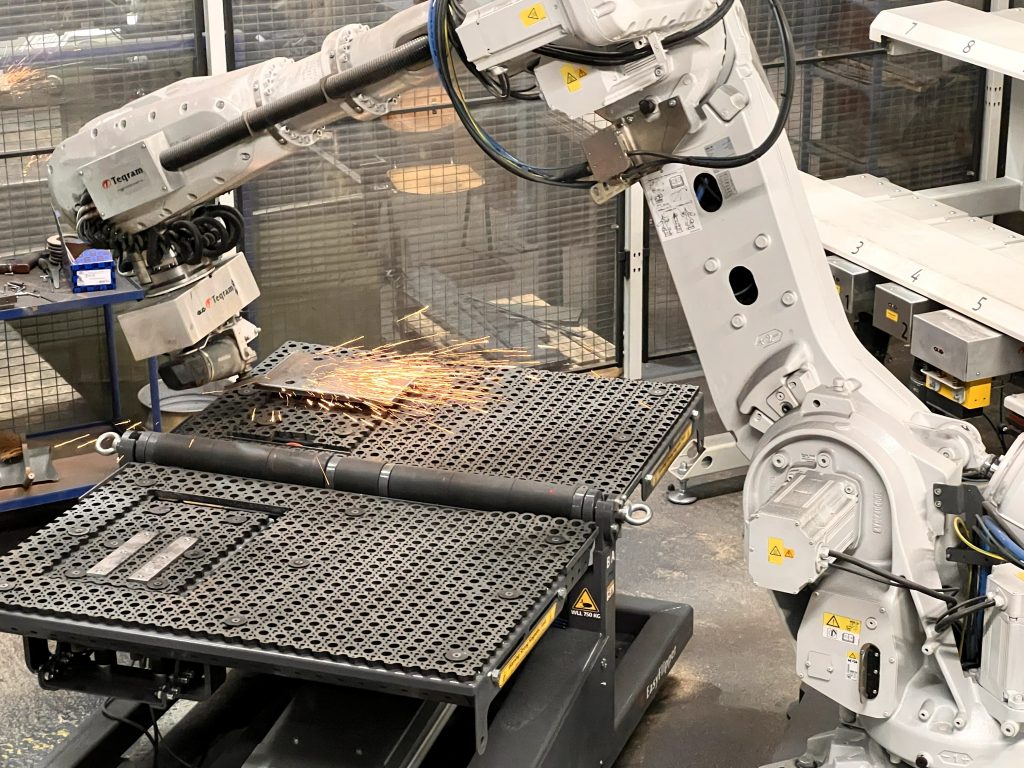
Removing cutting burrs, rounding edges and removing the heat-affected zone are among the most demanding grinding tasks in steel construction. This becomes particularly evident in shift operation, where it is challenging to maintain consistent quality over time. In addition to the physical strain, reproducibility was a key concern. Quality deviations cost time, material and margin.
Choosing the EasyGrinder
Peters Stahlbau consciously chose the Teqram EasyGrinder. The decisive factors were its easy integration into existing processes, the fact that no robot programming is required, and its intuitive operation directly by the machine operator. The robot fits seamlessly into the production process and was productive without a long start-up phase. On the shop floor, the new “colleague” was quickly given a name: Susi – a clear sign of strong acceptance within the team. Frank Evers explains:
“Our EasyGrinder – affectionately called Susi – delivers consistent P3 quality and works without fatigue, even across multiple shifts.”
Consistent quality and clear economic benefits
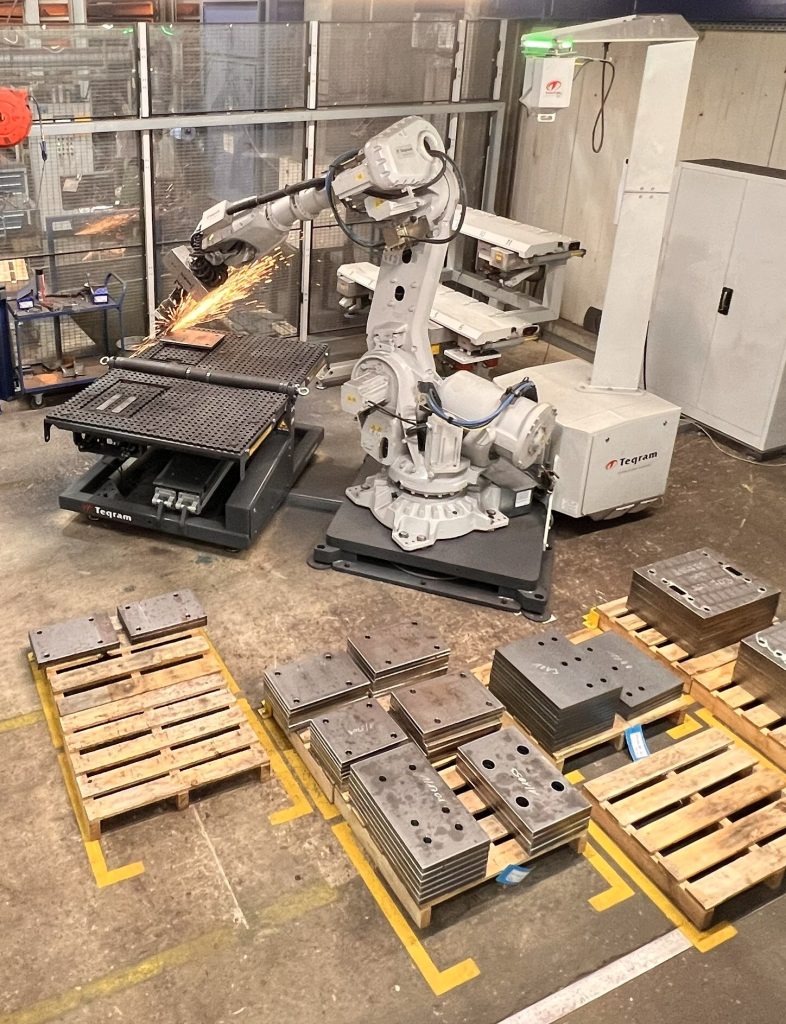
In addition to stable quality, the EasyGrinder also offers clear economic advantages.
“The robot uses grinding discs completely down to the backing pad – A result that is difficult to achieve manually.”
In manual grinding, declining force often leads to the premature replacement of discs. The grinding robot significantly reduces the consumption of grinding materials and greatly extends the service life of standard angle grinders. At the same time, it enables predictable cycle times and stable processes.
Ergonomics as a strategic factor
A key advantage is the noticeable reduction in physical strain on employees. Heavy grinding tasks are significantly reduced. In times of skilled labour shortages, this represents a decisive competitive advantage. With the successful integration of the EasyGrinder, Peters Stahlbau is strengthening its efficiency and competitiveness in a sustainable way.
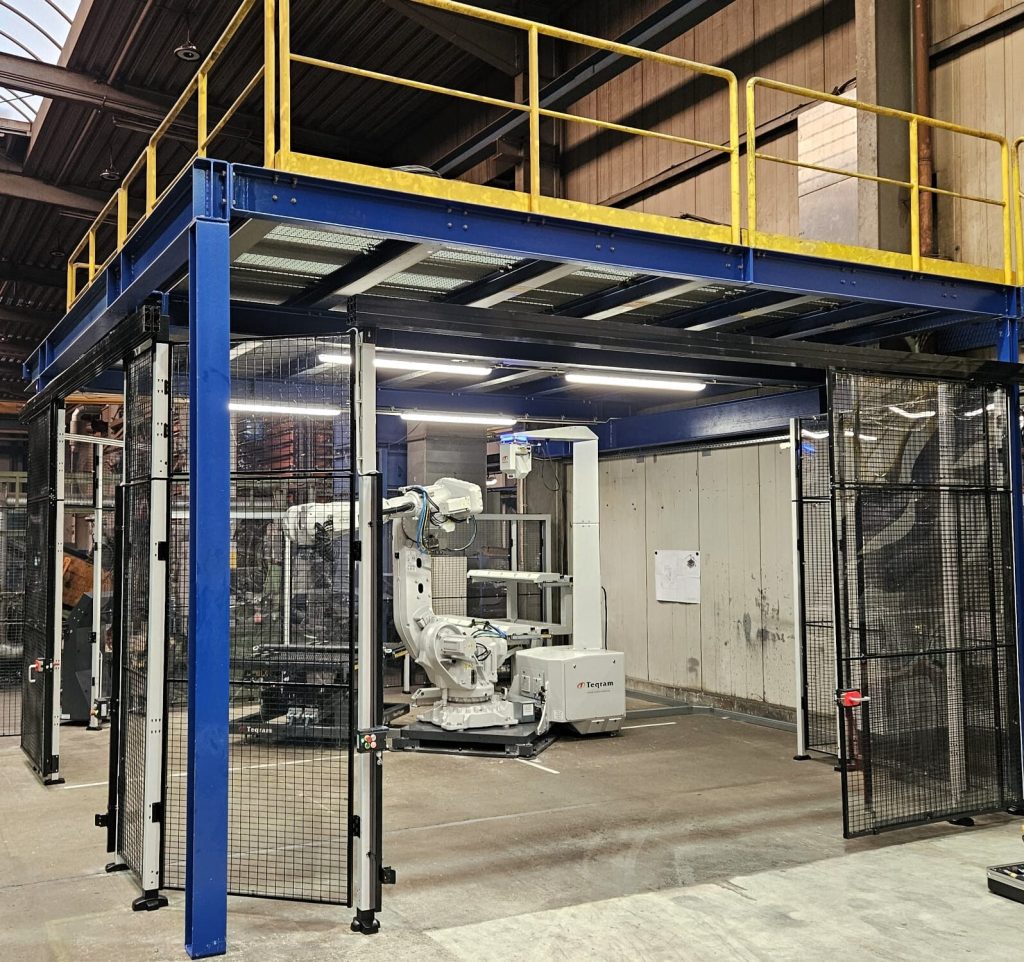
Peters Stahlbau – steel construction expertise with a focus on quality
Based in Itterbeck, Germany, the company employs around 180 people and delivers high-quality steel structures for industry, commercial construction and large-scale projects throughout Europe. Peters Stahlbau combines decades of experience with modern production technology and positions itself as a strong partner for complex construction projects with demanding quality standards.
Teqram – automation solutions for reproducible grinding quality
Teqram develops practical robotic solutions with integrated AI. The focus is on simple integration, intuitive operation and consistently reproducible results. With systems such as the EasyGrinder, Teqram supports steel construction companies in economically automating manual grinding processes and safeguarding quality in the long term.