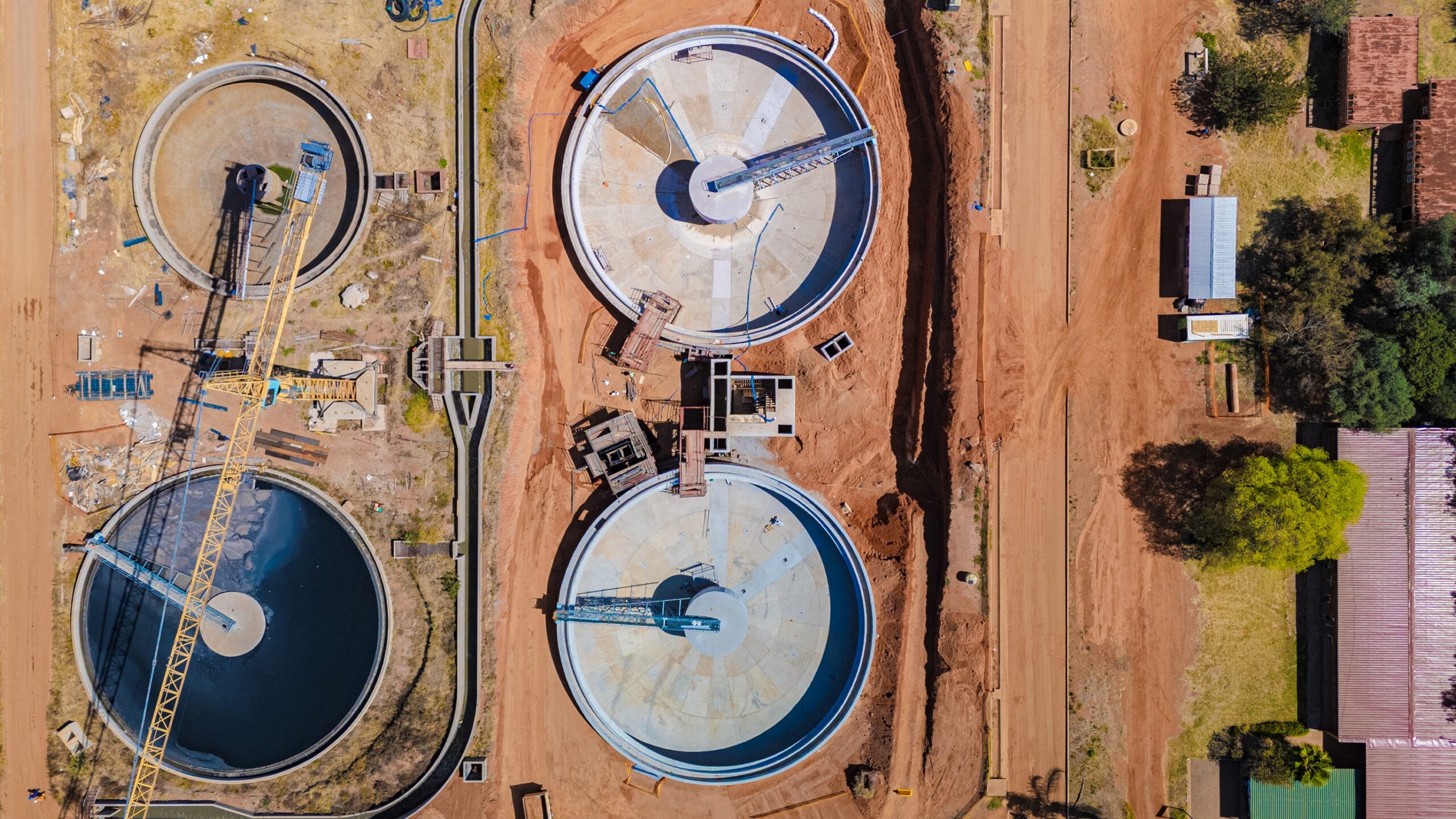
The City of Tshwane’s upgrading of the Rooiwal Wastewater Treatment Works is well advanced, with Phase 1B including the addition of two large primary settlement tanks which will each hold over six million litres of water.
Siyanda Dlamini, Construction Manager at contractor On Point On Time, notes that these tanks are double the size of typical municipal reservoirs and feature a conical geometry which presents significant construction challenges.
“Each structure boasts a diameter of about 35 m and a total central depth reaching 11 m,” Dlamini says. “Our construction methodology was built around the tanks’ geometry and excavation conditions, having to deal with groundwater and strict watertightness requirements.”
The scale of the civil works is reflected in the substantial volumes of readymix concrete supplied by AfriSam’s Ferro plant in Pretoria North – about 27 km from the Rooiwal site. According to Jonas Molomo, AfriSam’s Territory Sales Consultant for Readymix and Aggregate in Gauteng, these volumes could reach 3,300 m3 by the project’s completion in October this year.
Describing the evolution of the project, Dlamini says the On Point On Time team had to conduct more than 15 controlled blasts during the first six weeks of excavation, due to demanding rock conditions. The excavation also encountered significant groundwater, requiring that dewatering be conducted as a continuous operation for more than seven months.

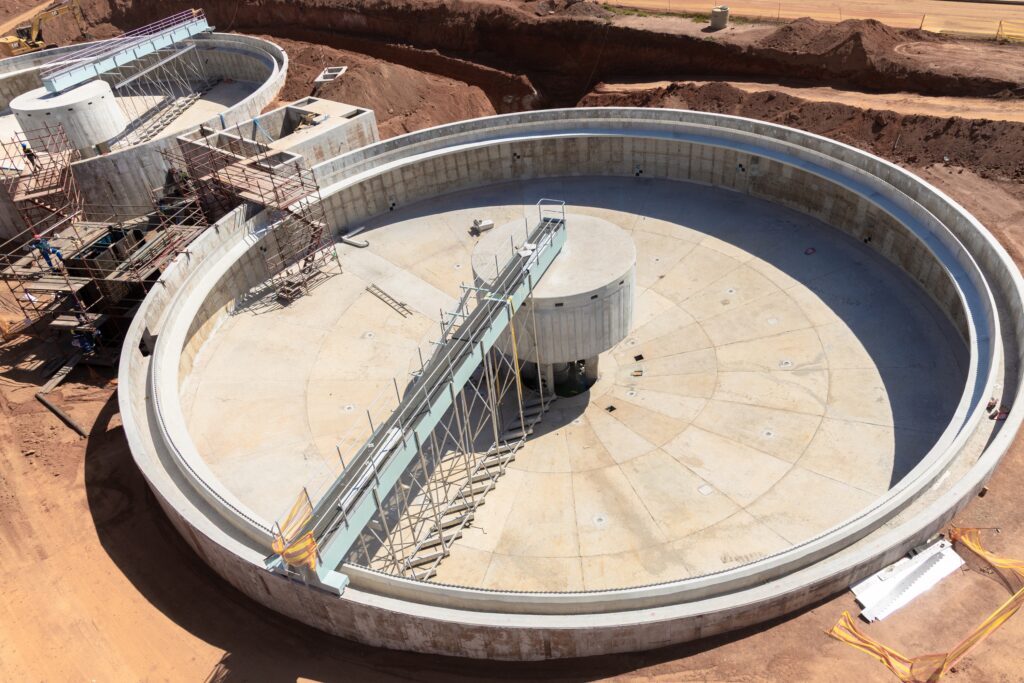
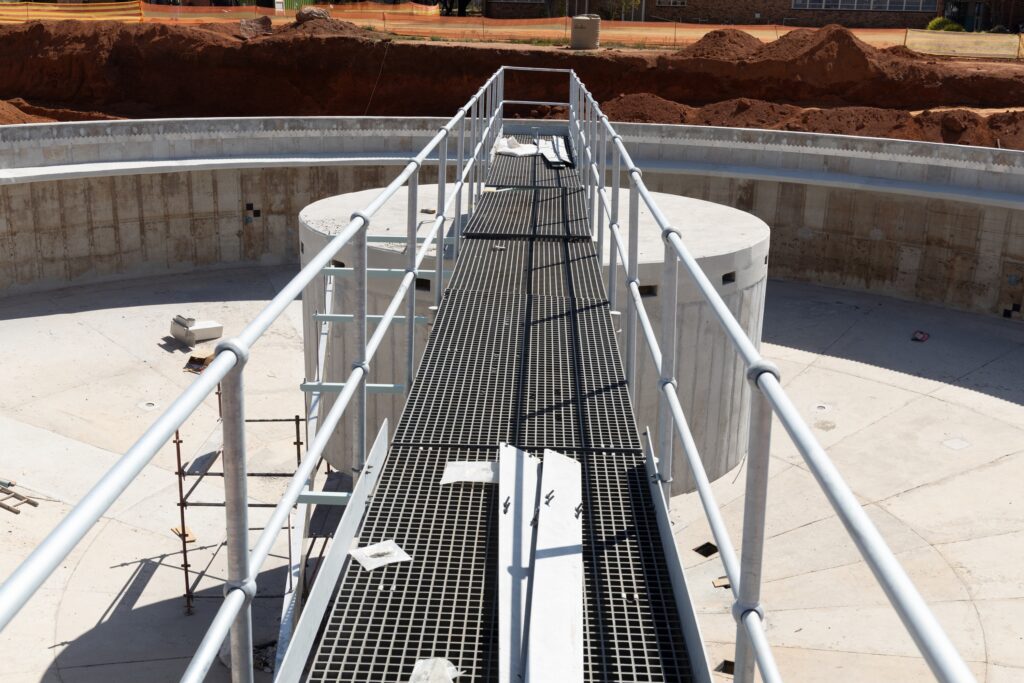
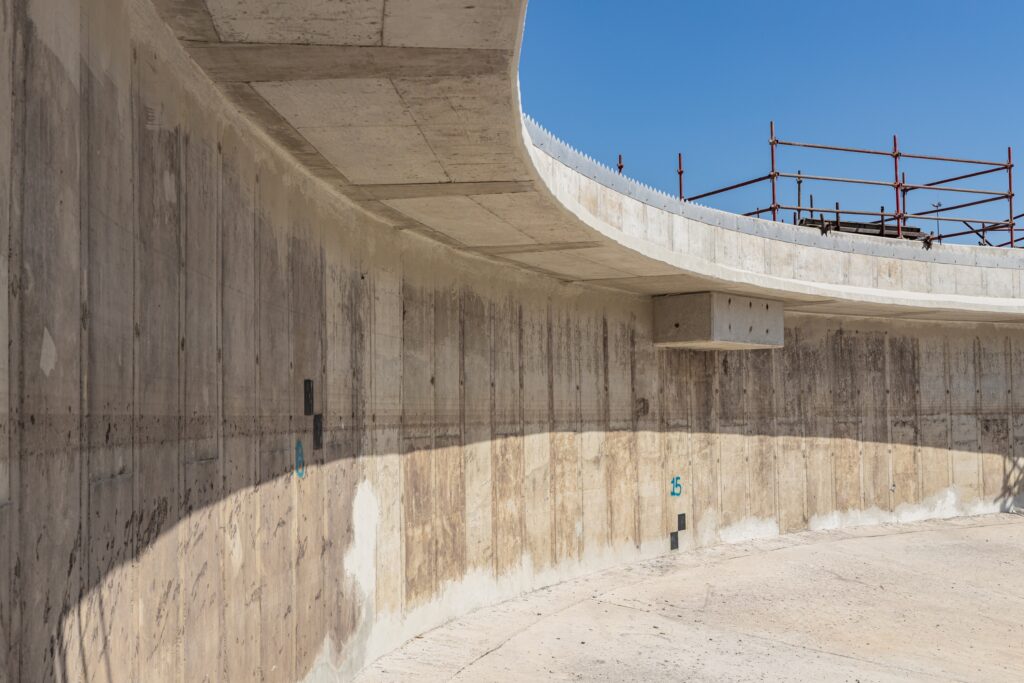
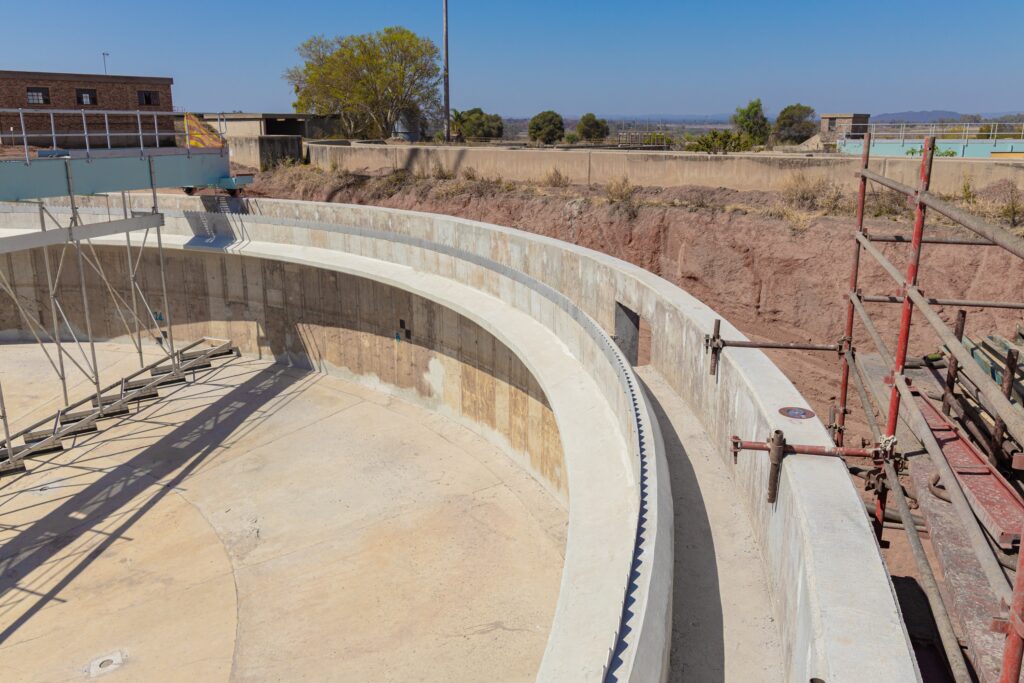
The tank’s unusual concrete geometry was a key feature of the project, with 500 mm thick concrete base for each tank and a floor that transitioned into the conical central section, tapering from 200 mm thick to 150 mm in the conical section. The surrounding walls are about 350 mm in thickness.
“Each conical tank was constructed in sections, with around 55 sections on each tank,” he explains. “This required successive pours and infills to progressively create the conical form.”
The experience of the team allowed the walls to be raised in large increments of 4,5 m in a single lift, he says. This approach was initially tested on half the circumference with successful results: no honeycombing and virtually no remedial patching.
“These larger lifts placed greater demands on concrete consistency, slump control, pumping and delivery sequencing, so we appreciated AfriSam’s professionalism and reliability,” he notes.
Molomo participated in the pre-contract discussions and helped establish the technical requirements with the project engineers and highlights that the project demands went beyond the large volumes of readymix.
“The wastewater environment required carefully selected materials and mix designs, with dolomite aggregate specified because of the aggressive conditions to which the concrete will be exposed,” he says. Dolomite provides a more durable surface in this environment, helping to prevent any deterioration from progressing deeper into the concrete.
Several concrete types were employed including 35 MPa structural concrete, watertight concrete and no-fines concrete. AfriSam’s technical team had to adapt its production arrangements accordingly, says Innocent Mkoma, Product Technical Team Leader at AfriSam – using mainly W35 durability mix for the walls and floors.
“The biggest challenge was the right water-retaining mix,” Mkoma says. “This ensures that the reservoir has minimum rework or patching, as that results in blemishes and might cause leaks.”
The mix designs also incorporated significant quantities of supplementary cementitious material, he says. The 35 MPa foundation mix was extended with up to 60% slag, while the W35 durability mix incorporated about 40% slag.
“AfriSam’s extended foundation mixes are designed to provide resistance to groundwater, while the durability mix is intended to withstand the aggressive environment within the wastewater structures,” he says.
The logistics of delivering this concrete were equally demanding, according to Paul Engelbrecht, AfriSam’s Regional Manager Readymix in Gauteng, with the largest wall pours measuring 120 m³ to 140 m³. “Rather than dispatching trucks continuously, we carefully controlled the delivery sequence,” says Engelbrecht, “with trucks spaced at roughly 30 minute intervals to match the contractor’s placing rate.”