03 November 2026
As the environmental and compliance framework for operating industrial boilers sees the most aggressive overhaul in a decade, AES, South Africa’s go-to industrial steam operations and project company, is prioritising providing clients with the necessary insights and data to ensure compliance across a broad spectrum of emissions, says Commercial Director Dennis Williams.
The company has had some substantial emission reduction successes, including instances of a 15 % efficiency gain and another of a 100 % sulphur emission reduction.
Understanding legislation
Two key pieces of legislation shape emissions management in South Africa: the Climate Change Act 22 of 2024, which provides the overarching framework for the country’s transition to a low-carbon economy, including sectoral emission targets and company carbon budgets; and the Carbon Tax Act 15 of 2019, which puts a direct price on greenhouse gas emissions. These sit alongside the National Environmental Management: Air Quality Act, under which emissions reporting and licensing are regulated: “These are not yet perfectly aligned. Government departments assess requirements differently, and legislation can sometimes appear contradictory in its operational application,” Williams advises, adding that carbon tax recognises the renewable nature of certain fuels: “Woody biomass CO2 emissions, for example, are treated as carbon neutral for carbon-tax purposes. Greenhouse gas reporting, however, requires companies burning biomass to report their actual CO₂ emissions,” he points out.
The transition into Phase 2 of the Carbon Tax Act, for the period 2026–2030, increases the headline rate to R308 per tonne of CO₂e. Treasury however signals an increase towards R462 by 2030.
“Facilities with a large boiler, or a combined fleet of smaller boilers with capacity exceeding 10 MWth are liable for carbon tax – even if usage remains below the threshold,” Williams says.
For some time, municipalities regulated sulphur oxides (SOₓ), nitrogen oxides (NOₓ) and particulate emissions. Requirements vary, with particularly stringent rules applied in pollution hotspots such as the Durban South Basin, Secunda and Vanderbijlpark.
Public scrutiny is also increasing, Williams says: “20 years ago, people could not post an image of a stack and tag a client by name on social media. So, activism is putting pressure on management authorities, starting with local councils. In turn, they are putting pressure on sites and plant operators.”
Although AES is not a legal specialist and refers clients to experts, it supports compliance by providing reliable operations and well tracked fuel consumption data.
Williams explains: “When looking at efficiency on an ongoing basis, AES can improve the quality of data and traceability of operational performance. Measuring and monitoring fuel usage is key to our business. This is more daunting for those operating boilers themselves. Periods between fuel purchases could vary and an accurate indication of monthly, weekly and daily fuel consumption would be difficult to assess.”
AES’s remote monitoring system (RMS) also logs critical operating information in the event of a problem. For one of AES’s Cape Town clients, cameras monitor stacks. Should there be a reported issue, AES can check stack emissions at that time against the boiler’s operating data to explain what happened.
“For example, was the client site drawing steam at a very high flow rate before a plant breakdown, which immediately shut off steam demand? This type of mitigating circumstance is important from a compliance perspective,” he says.
Proactive management also means training operators to monitor visible stack emissions and combustion-efficiency ratios. Maintenance checks and, where required, isokinetic emissions tests monitor CO₂, SOₓ, NOₓ and particulates.

AES’s systems turn data reporting into scheduled prompts and job cards, Williams explains: “Reporting data for greenhouse gases and isokinetic emission testing is all put into our systems, which in turn generates job cards. Prompts come through to ensure timeous reporting and continued compliance.”
Adding fuel to the fire
Fuel choice is an important starting point.
SOₓ emissions are strongly influenced by fuel sulphur content. Williams recalls: “At one stage, there was a significant focus on replacing coal boilers with heavy furnace oil (HFO) burners. That became a problem because it contains 3% sulphur.”
AES recommends low-sulphur liquid fuels and purchases coal with less than 1% sulphur.
Particulate emissions, meanwhile, are influenced by equipment age and condition. Older boilers may have been designed to meet standards far less stringent than those applied to new installations.
“If well maintained, boilers have an incredibly long workable lifespan. Assets that are 40 to 60 years old were designed to meet much less stringent emission specifications – as opposed to a new plant where the specification might be sub-250 or sub-120 mg/Nm3 for particulates,” Williams says.
Furthermore, NOₓ formation is closely linked to combustion conditions. Older boilers may lack the controls and staged-combustion systems used in modern equipment to limit nitrogen oxide formation. Air – which contains more than 78% nitrogen – is essential for combustion, but its introduction into the combustion zone of a boiler must be carefully controlled. This requires operational expertise and, in some cases, capital investment.
While regulations may allow some consideration for older plant, Williams emphasises that this is not “open-ended and forever”. Upgrades such as grit arresters, bag filters and electrostatic precipitators (ESPs) may also be needed to control particulates.
Fuel quality matters too, with solid fuel particle size and loading affecting combustion control. Excess fine particles can be carried up the stack as emissions.
Emission reductions, efficiency gains
AES’s 3-phase project for a Limpopo food manufacturer demonstrates how controls, operational support and fuel selection can work together, according to Williams: “Our control systems were placed onto their boilers. This included a load balancing system, which showed an improvement in efficiency and emissions. The second phase involved providing operational oversight and skills, and the third phase was procuring the right fuel.”
A Ringelmann chart, which grades visible stack emissions from clear to dark, recorded a decline from level 3 to level 1. This was accompanied by a 15% efficiency gain.
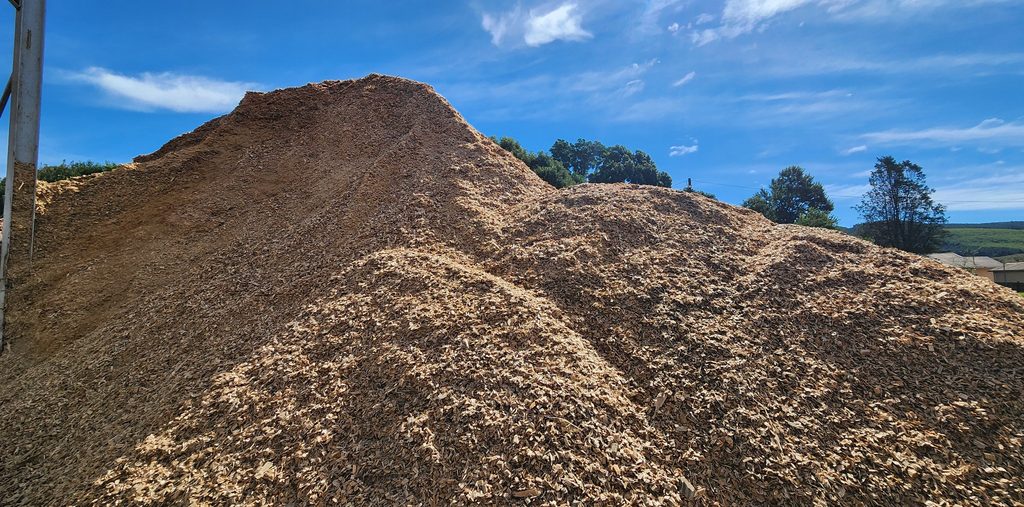
In another client project, AES supported its client – a Durban-based cleaning-products and toiletries manufacturer – in switching from low-sulphur fuel oil to biomass, reducing sulphur emissions by a very impressive 100%.
Managing installed capacity
Emissions legislation is also influencing decisions about spare capacity. Rising carbon tax may discourage some manufacturers from installing backup boilers, even when spare capacity could help to manage production interruptions.
Other manufacturers are mothballing additional plant to avoid crossing the 10 MWth threshold, accepting the operational risk of relying on a single functioning asset – while other businesses may choose smaller boilers when replacing plant to remain below tighter particulate emissions thresholds.
“Across these various decisions, reliable data, appropriate fuel choices, efficient combustion and planned maintenance are central to managing emissions and understanding the operational and financial implications of compliance,” Williams concludes.